 Books
Peekaboo with a board book
Hide and find
5 minAt homeHands-on play with counting, sorting and cause and effect that lays the ground for maths and problem solving.
Last updated:
All decksCompare the age ranges and time, then open a card for materials and instructions.
BooksHide and find
5 minAt homeAge range: Up to 2 years · 5 min
Hold a sturdy board book and cover the pictures with your hand, then lift it away and warmly name what appears. Let your baby reach out and pat the pages.
 Toys
Hide and find
5 minAt homeAge range: Up to 2 years · 5 min
Hide your face behind your hands or a soft cloth, then reveal it with a happy \"peekaboo!\" Repeat slowly and watch your baby light up each time.
 Montessori
Cause and effect
10 minAt homeAge range: 6 months–2 years · 10 min
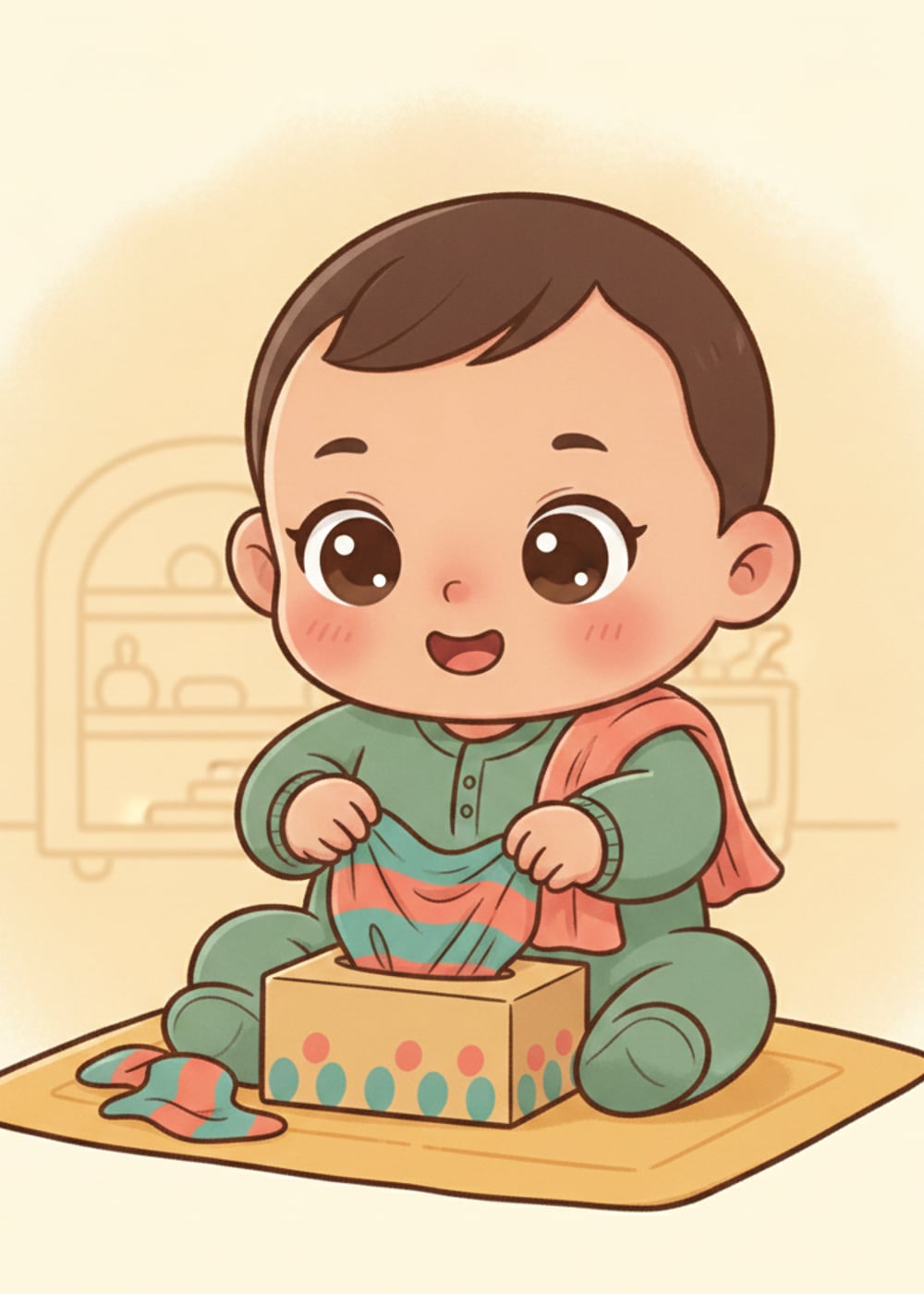
Stuff a few large muslin cloths or scarves into an empty tissue box, leaving one corner poking out. Sit beside your baby and cheer as they tug each one free, then load the box again.
 Montessori
Hide and find
10 minAt homeAge range: 6 months–3 years · 10 min
Hand your baby a few soft balls and a box with a hole cut in the lid. Cheer each time they push one through, then tip them out to start again.
 Toys
Problem solving
10 minAt homeAge range: 1–4 years · 10 min
Give your child a chunky knob puzzle with three or four animal or vehicle pieces. Hand over one piece, name the picture, and let them try spots until it fits. Turn the puzzle toward them if they hesitate.
 Home
Cause and effect
5 minAt homeAge range: 1–3 years · 5 min
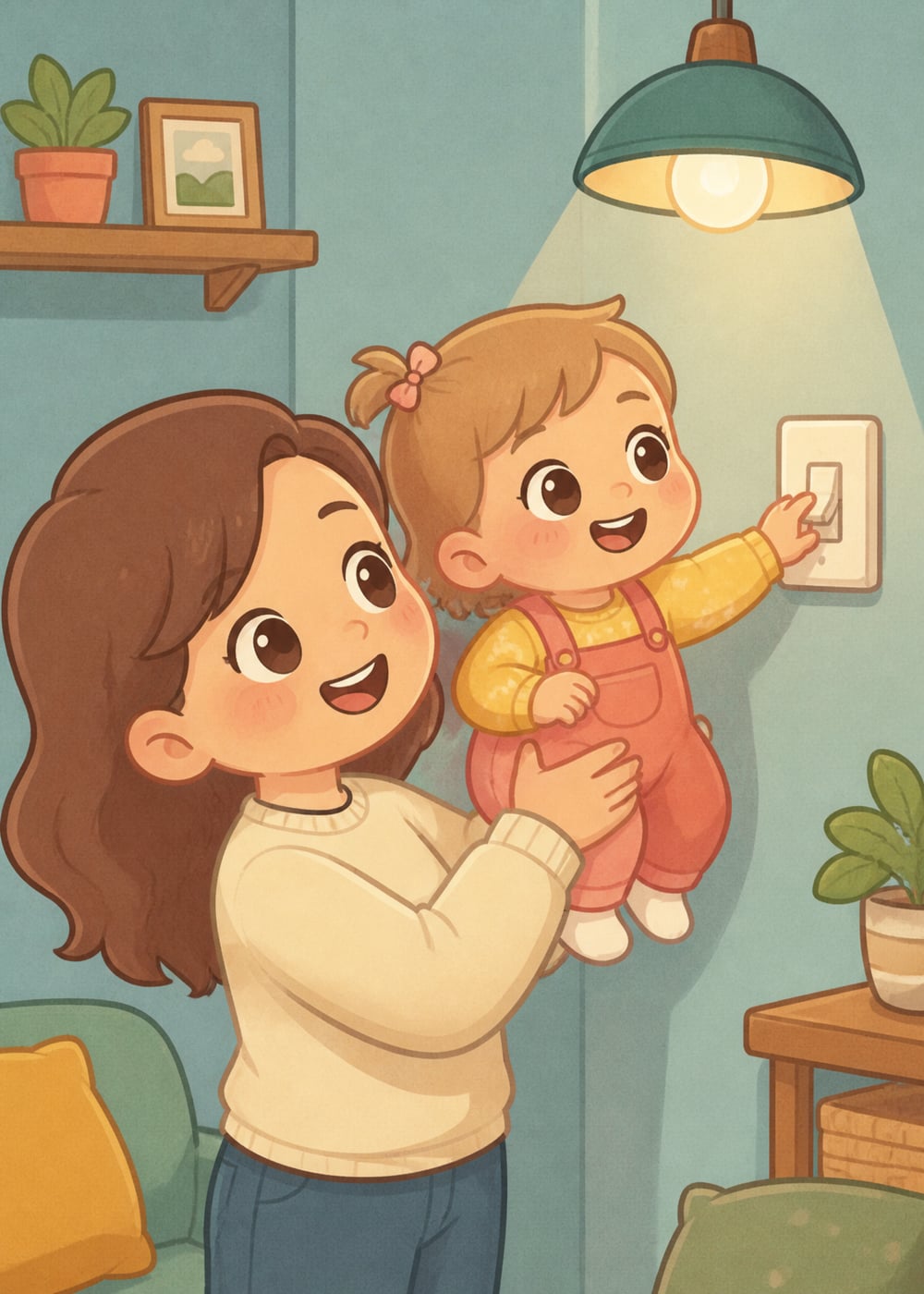
Lift your toddler up to a wall light switch and say \"on\" as they push it, then \"off\" as they push it back. Look up at the light together each time, and pause to see if they say the word with you.
 Outdoors
Early science
10 minOutsideAge range: 1–3 years · 10 min
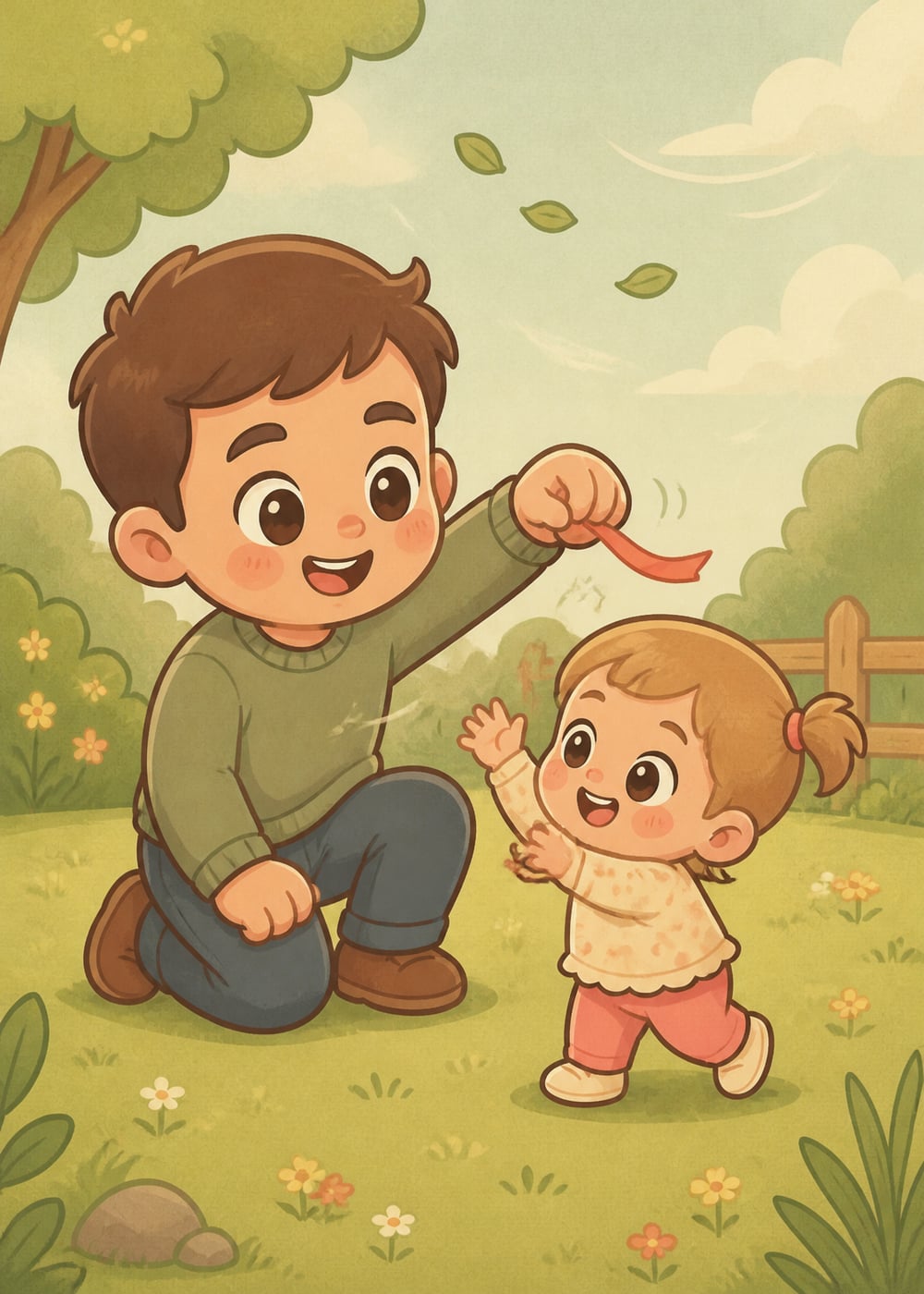
Hold one end of a short ribbon together on a breezy day. Watch it flutter and flick, then move your arm to make it swoop.
 Home
Cause and effect
10 minAt homeAge range: 1–3 years · 10 min
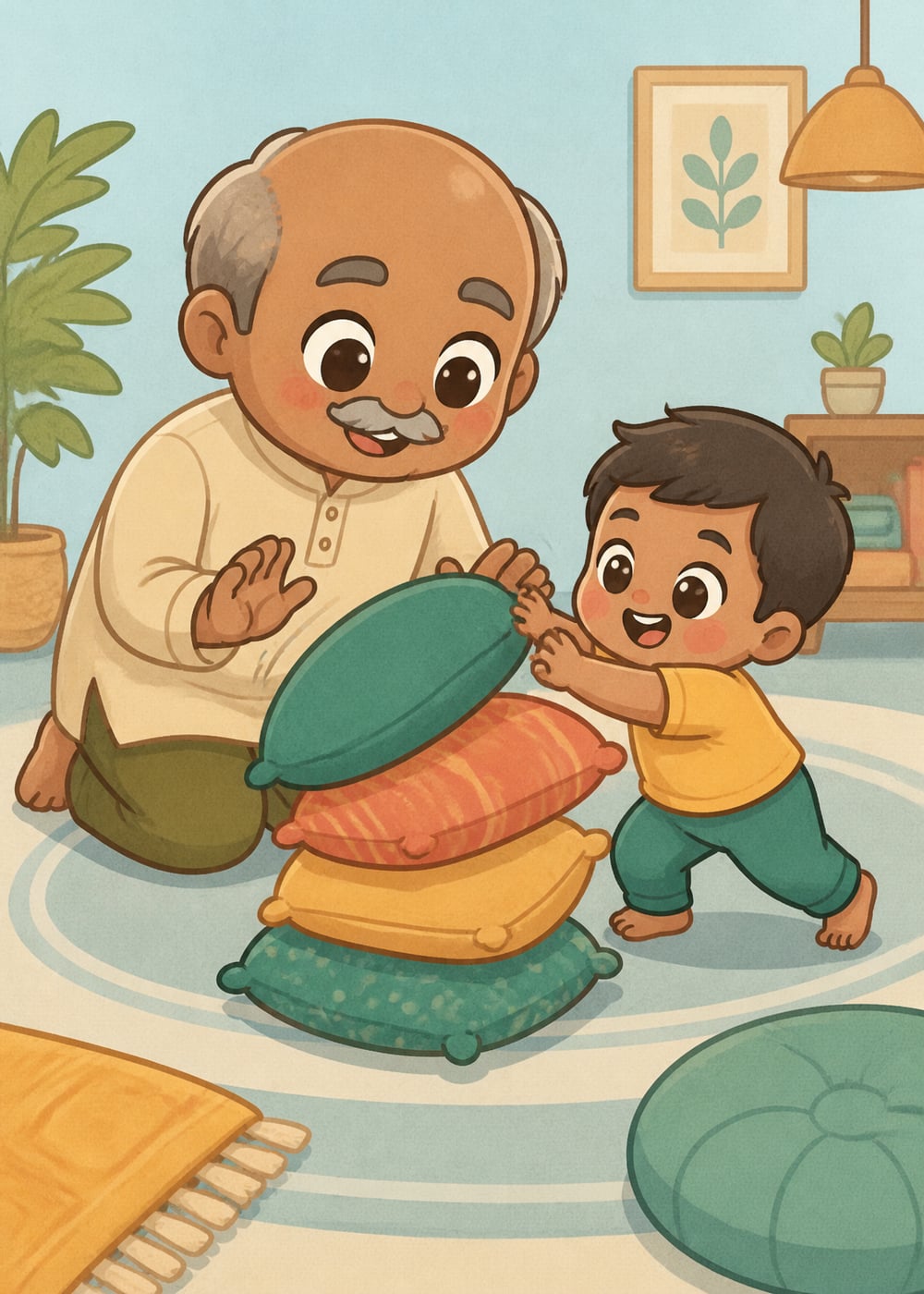
Stack three or four sofa cushions on the floor, then let your toddler push them over. Build the tower again and say \"ready, set\" before each tumble.
 Montessori
Hide and find
10 minAt homeAge range: 1–3 years · 10 min
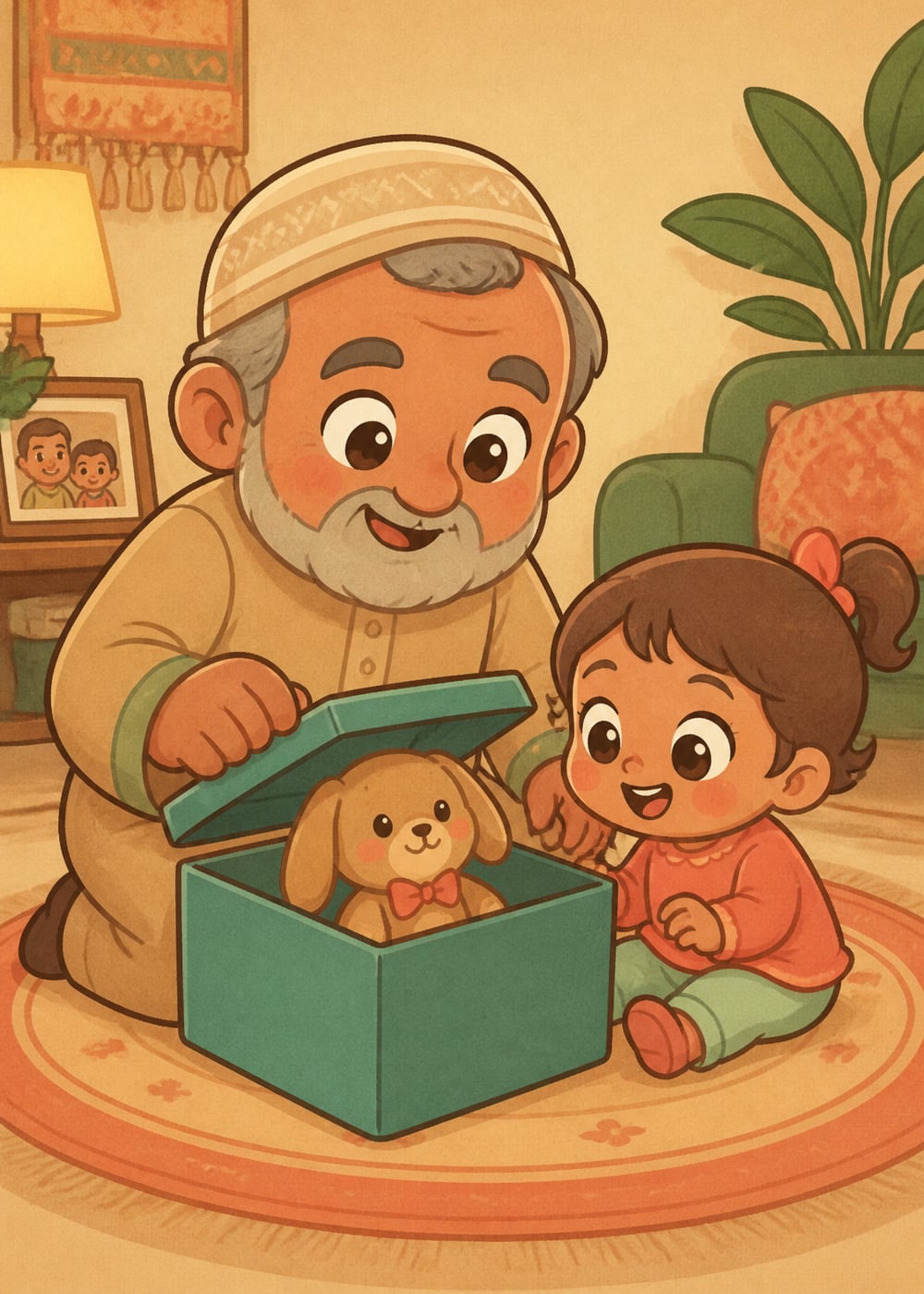
Put a favorite toy in a shoebox while your toddler watches, and set the lid loosely on top. Help them lift the lid to find it, then close and try again. Make the lid easier or harder to lift as they grow.
 Learning
Matching
10 minAt homeAge range: 1–3 years · 10 min
Set out a few plastic containers with their lids mixed up, and help your toddler find which lid fits which pot. Clap together each time a pair snaps into place.
 Toys
Cause and effect
10 minAt homeAge range: 1–3 years · 10 min
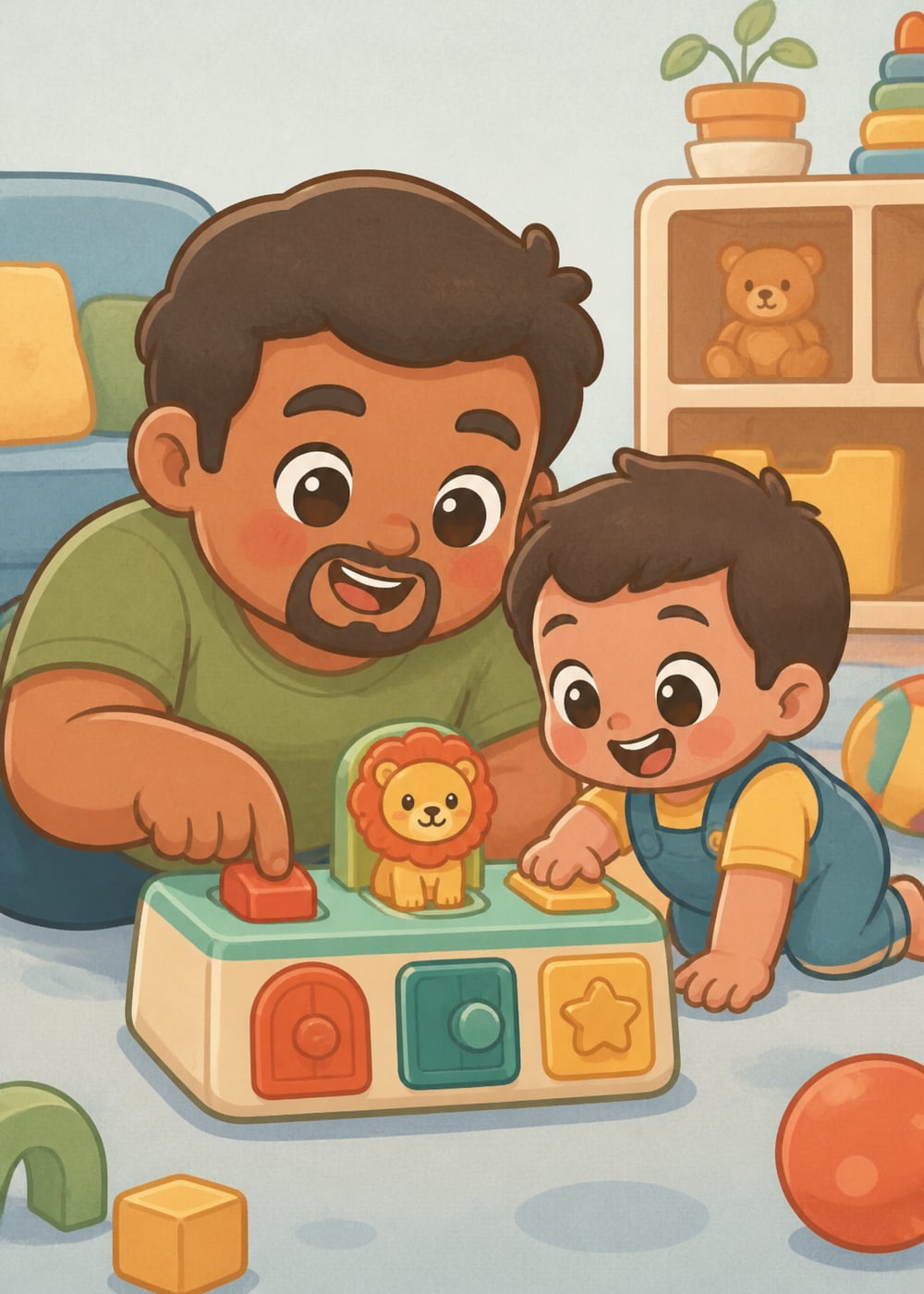
Show your toddler a pop-up toy with doors, knobs or buttons. Press one together so an animal pops up, say its name, then let them find the next button.
 Toys
Cause and effect
5 minAt homeAge range: 1–3 years · 5 min
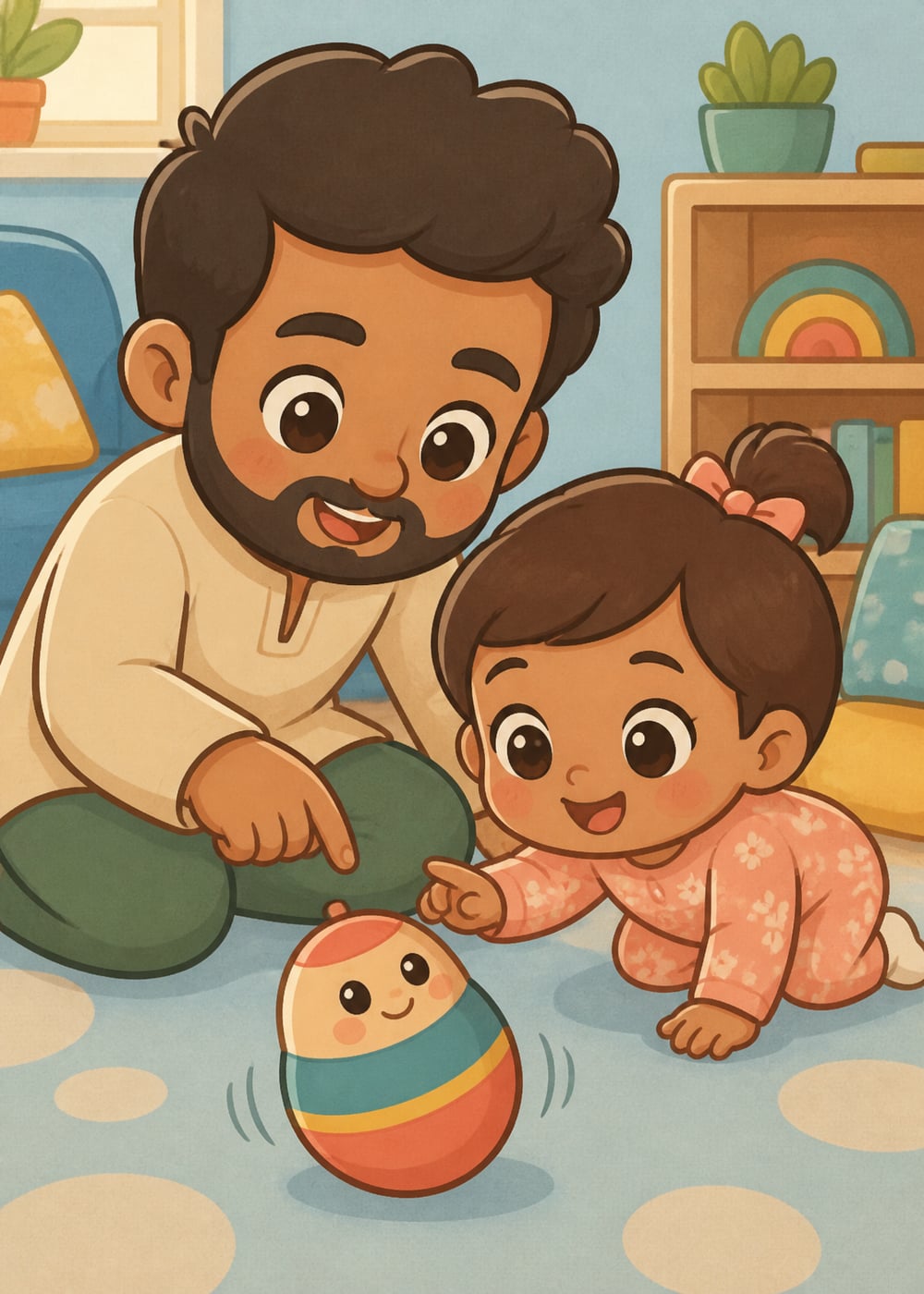
Set a roly-poly wobbler on a smooth floor. Tap it gently and watch it rock back upright. Guide your toddler's hand to give it a tap, then let them try.
 Montessori
Hide and find
10 minAt homeAge range: 1–3 years · 10 min
Prop a wide cardboard poster tube at an angle on a cushion. Drop a soft ball or a rolled-up pair of socks in the top and let your toddler watch it roll out the bottom, then help them drop one in. Try it from different sides.
 Toys
Early science
5 minAt homeAge range: 1–3 years · 5 min
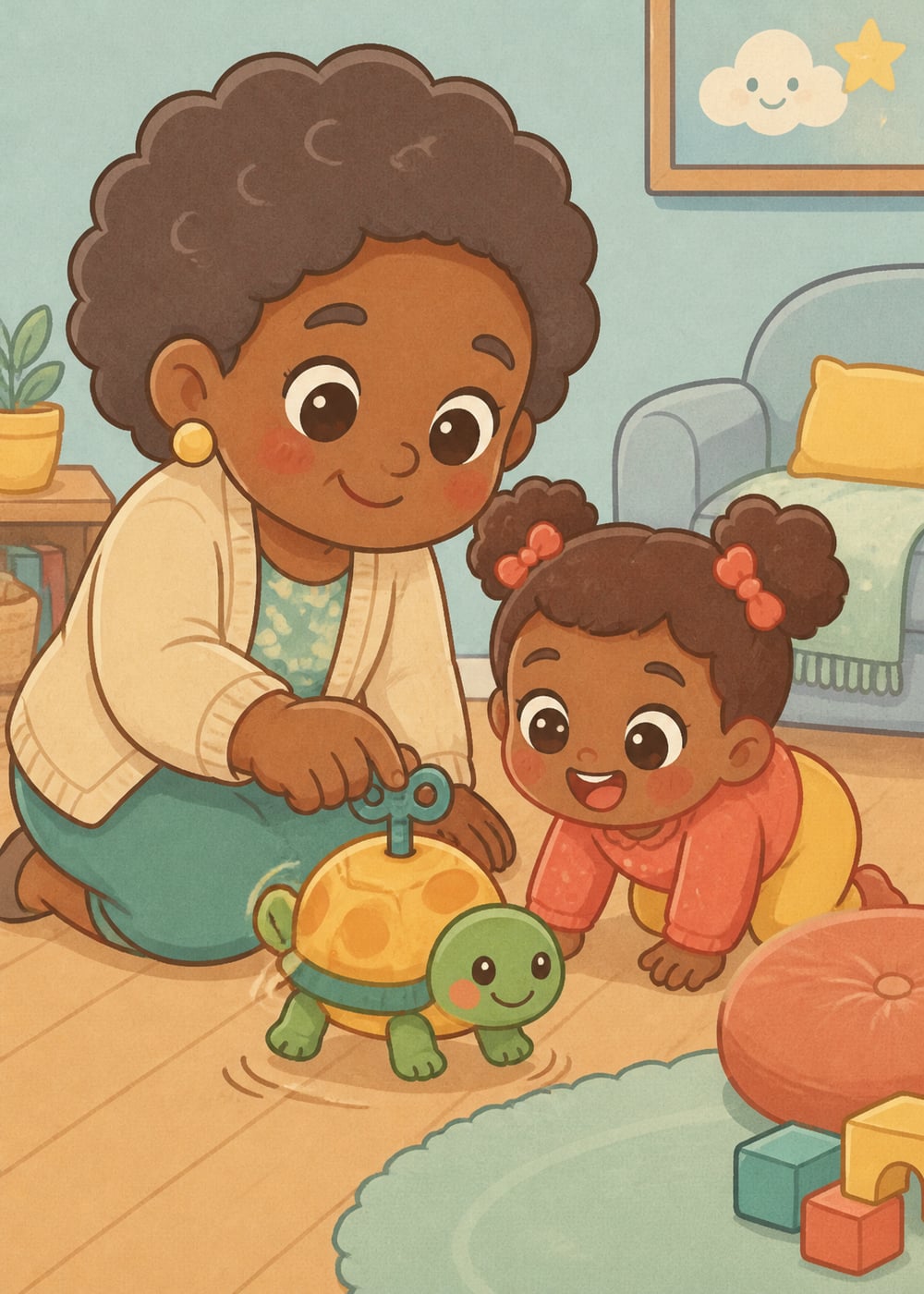
Wind a simple toy and set it on the floor. Let your toddler watch it wobble along, then ask them to help you wind it again. Pick it up and try it on a different surface.
 Learning
Counting
10 minAt homeAge range: 1–3 years · 10 min
Hold up one hand and sing a counting rhyme like five little ducks, folding down a finger for each duck that swims away. Point to each finger as you say its number.
 Learning
Counting
5 minAt homeAge range: 1–3 years · 5 min
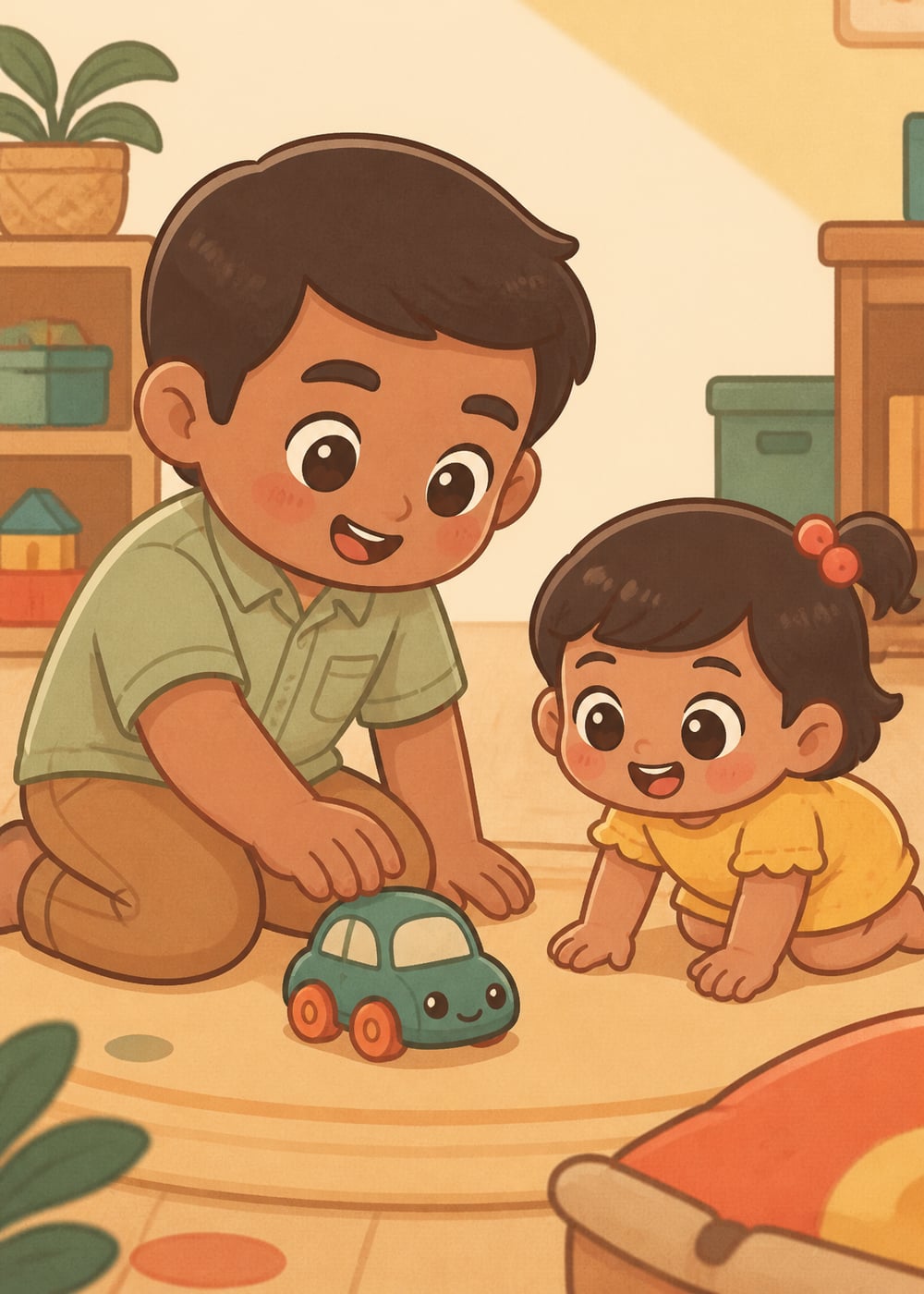
Before a swing, a push on a toy, or knocking a tower down, count \"one, two, three\" slowly and then say \"whoosh\". Wait for your toddler to look at you before you start the count.
 Books
Matching
10 minAt homeAge range: 1–4 years · 10 min
Point to an everyday object on a page, like a shoe, a spoon, or a cup. Ask your toddler to go and find the real one, bring it back, and put it next to the picture so you can see them together.
 Outdoors
Filling and emptying
15 minOutsideAge range: 1–4 years · 15 min
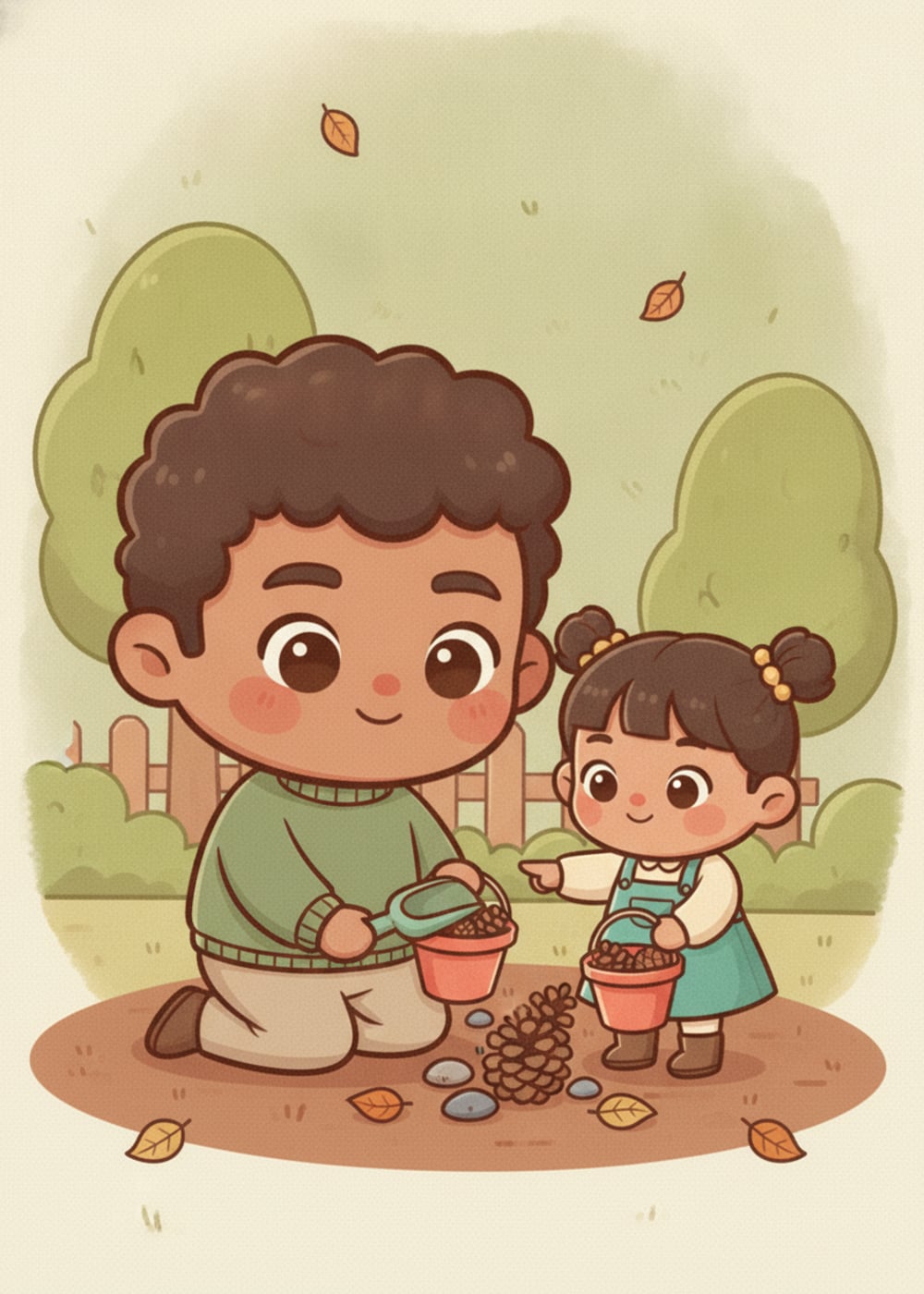
Hand your toddler a small bucket outdoors and help them load it with pinecones, big stones, or fallen leaves. Let them tip the whole lot out and start again as many times as they like.
 Outdoors
Early science
15 minOutsideAge range: 1–4 years · 15 min
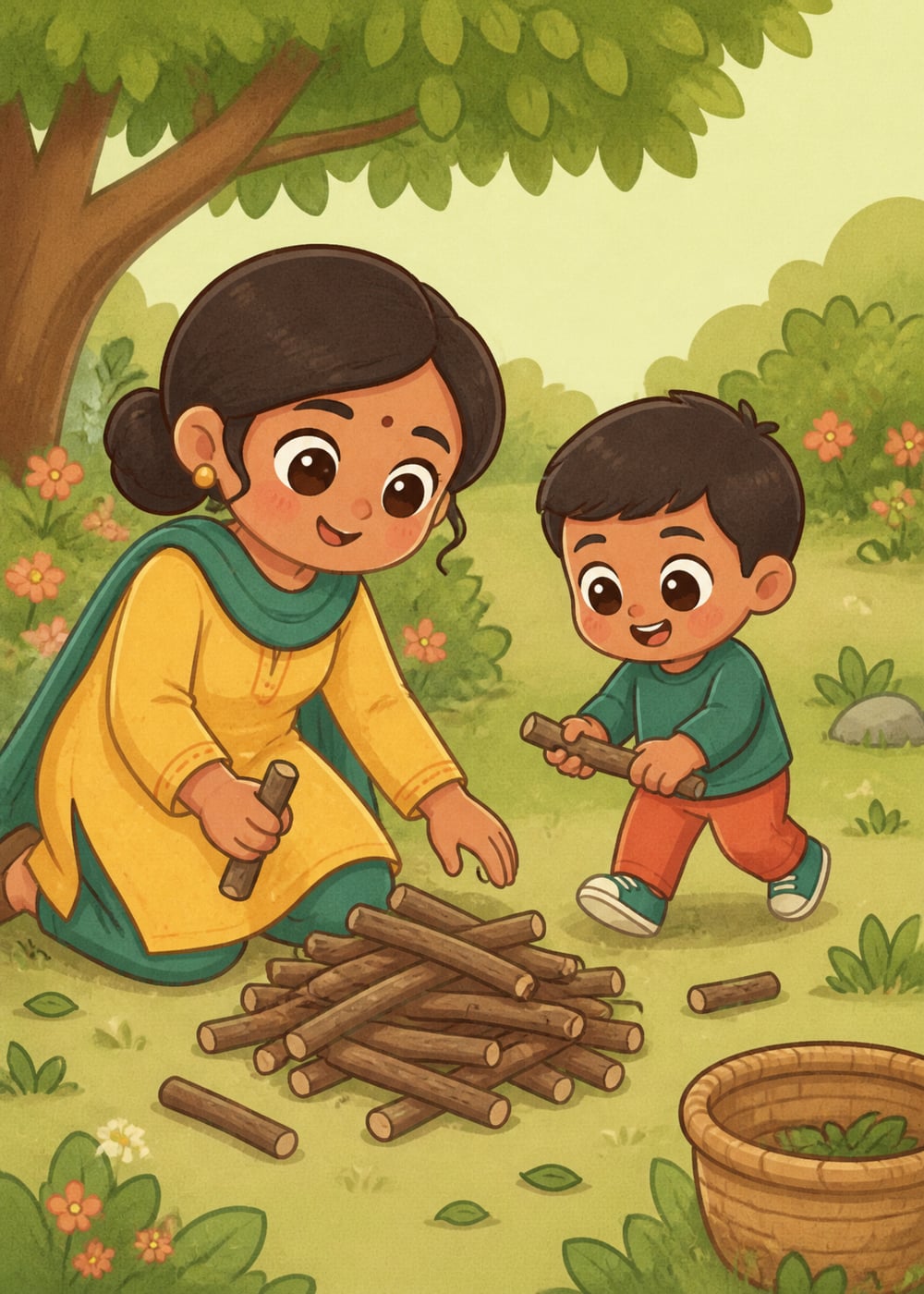
On a walk or in the yard, look for short, thick sticks together. Let your toddler carry each one to a pile, talk about which are long, short, bumpy or smooth, and see how big the pile can get.
 Outdoors
Cause and effect
15 minOutsideAge range: 1–4 years · 15 min
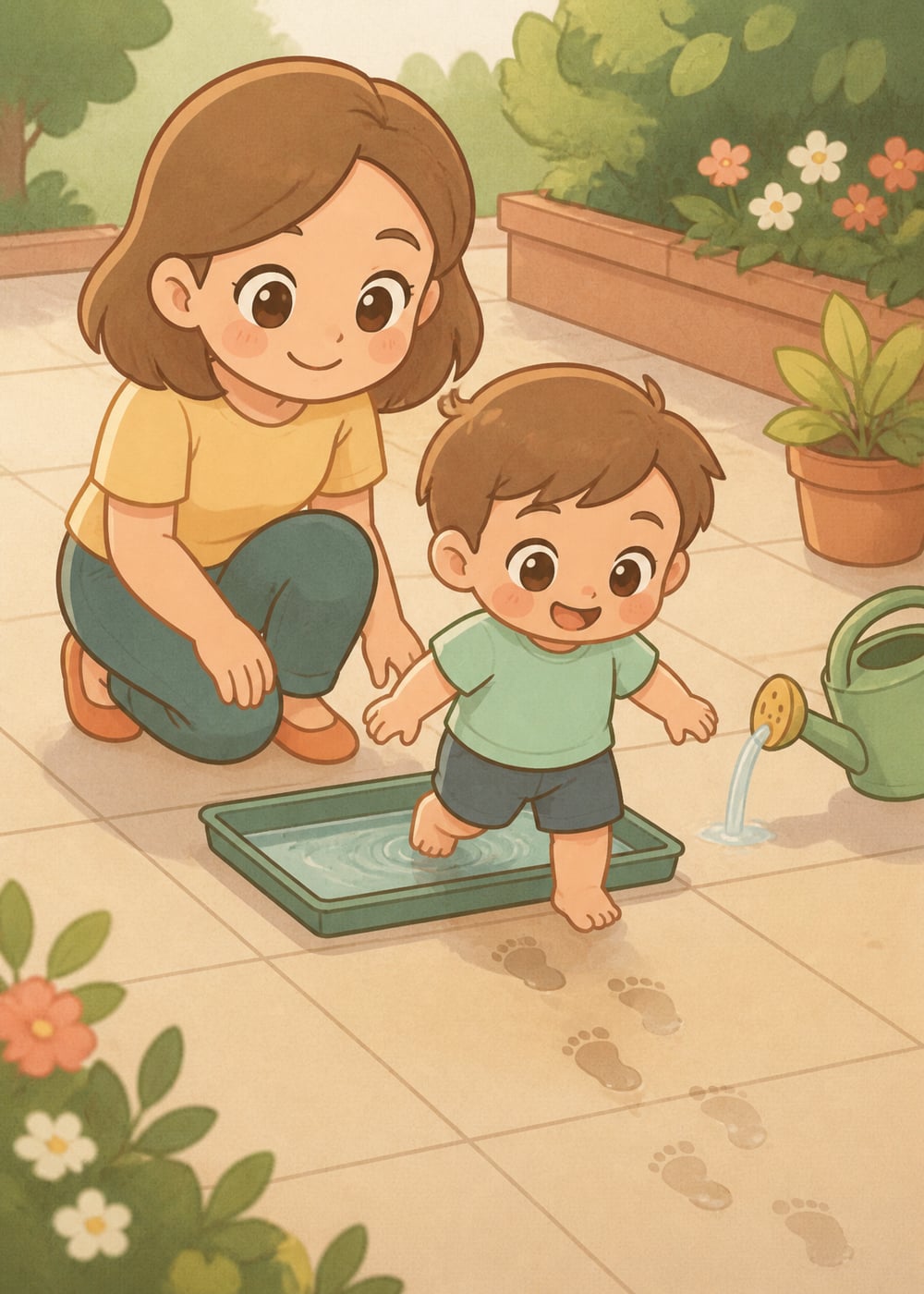
Let your toddler step in a shallow tray of water, then walk them across a dry patio or sidewalk. Look back at the prints and watch them fade in the sun.
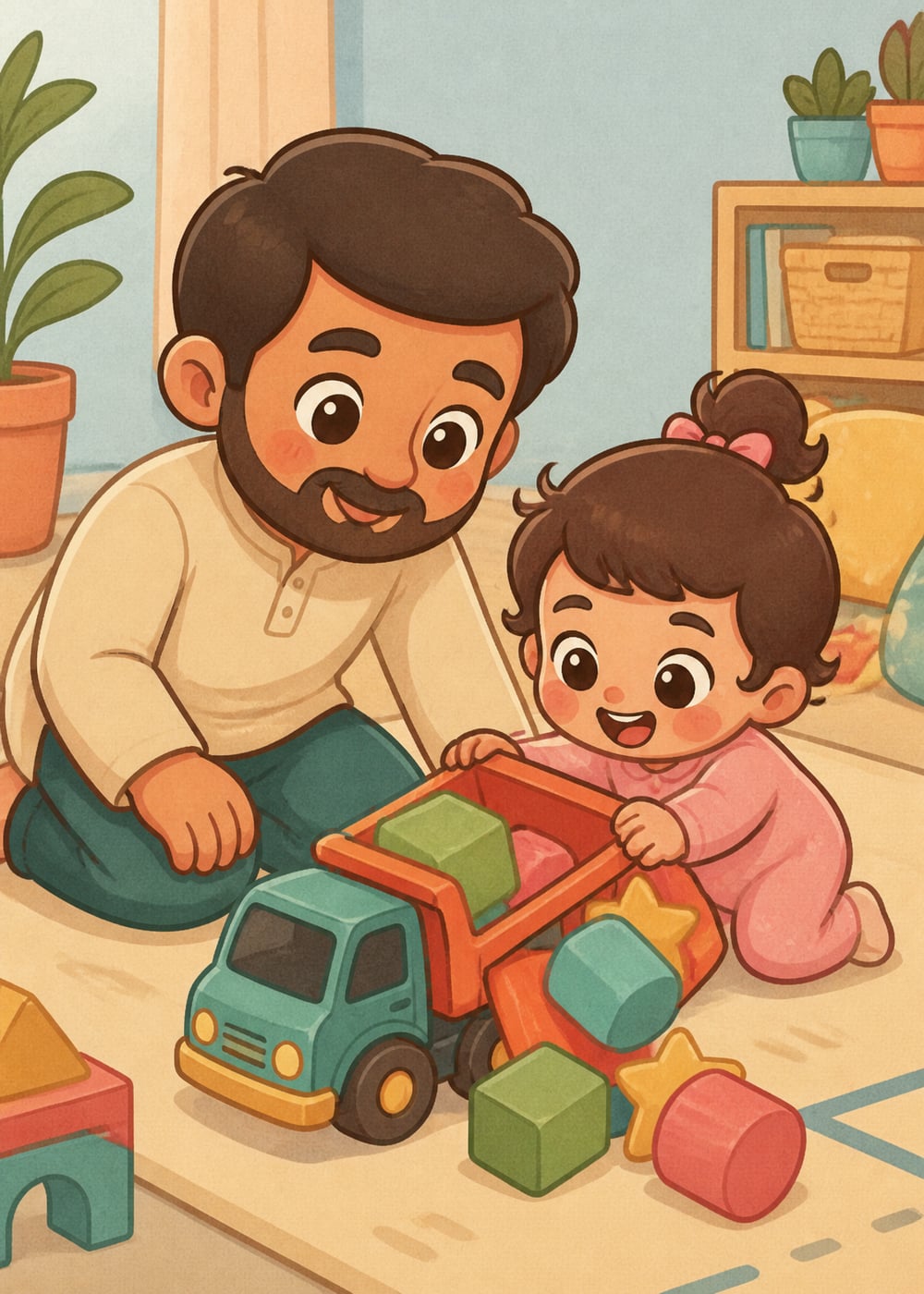 Toys
Filling and emptying
15 minAt homeAge range: 1–4 years · 15 min
Fill the back of a toy dump truck with large blocks or soft toys, push it across the room, then tip the load out in a pile. Load it up again and drive to a new spot.
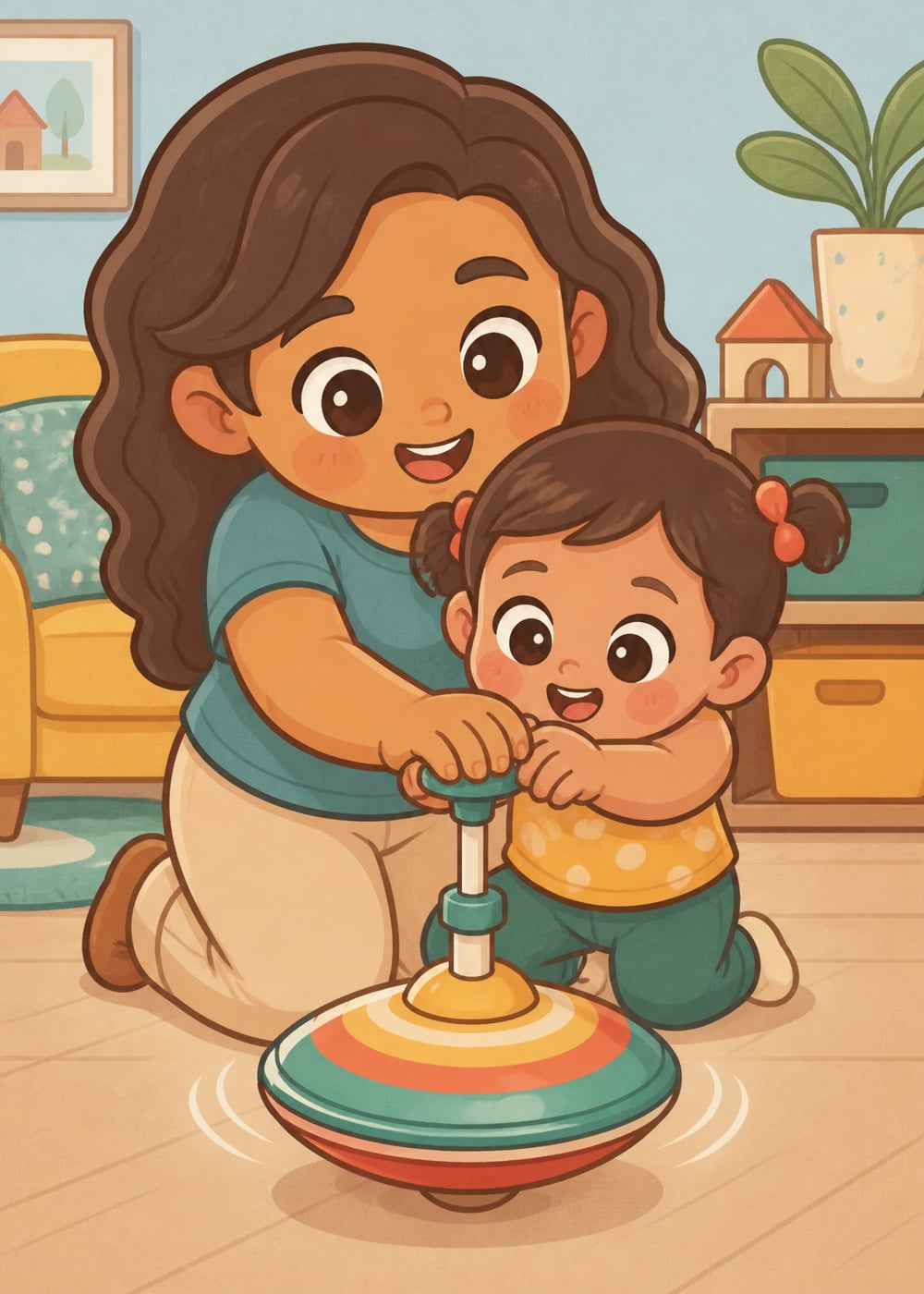 Toys
Cause and effect
10 minAt homeAge range: 1–4 years · 10 min
Set a big push-down spinning top on a hard floor. Pump the handle until it spins and hums, then put your toddler's hands on the handle under yours and push together. Watch the colors blur and wait for it to wobble to a stop.
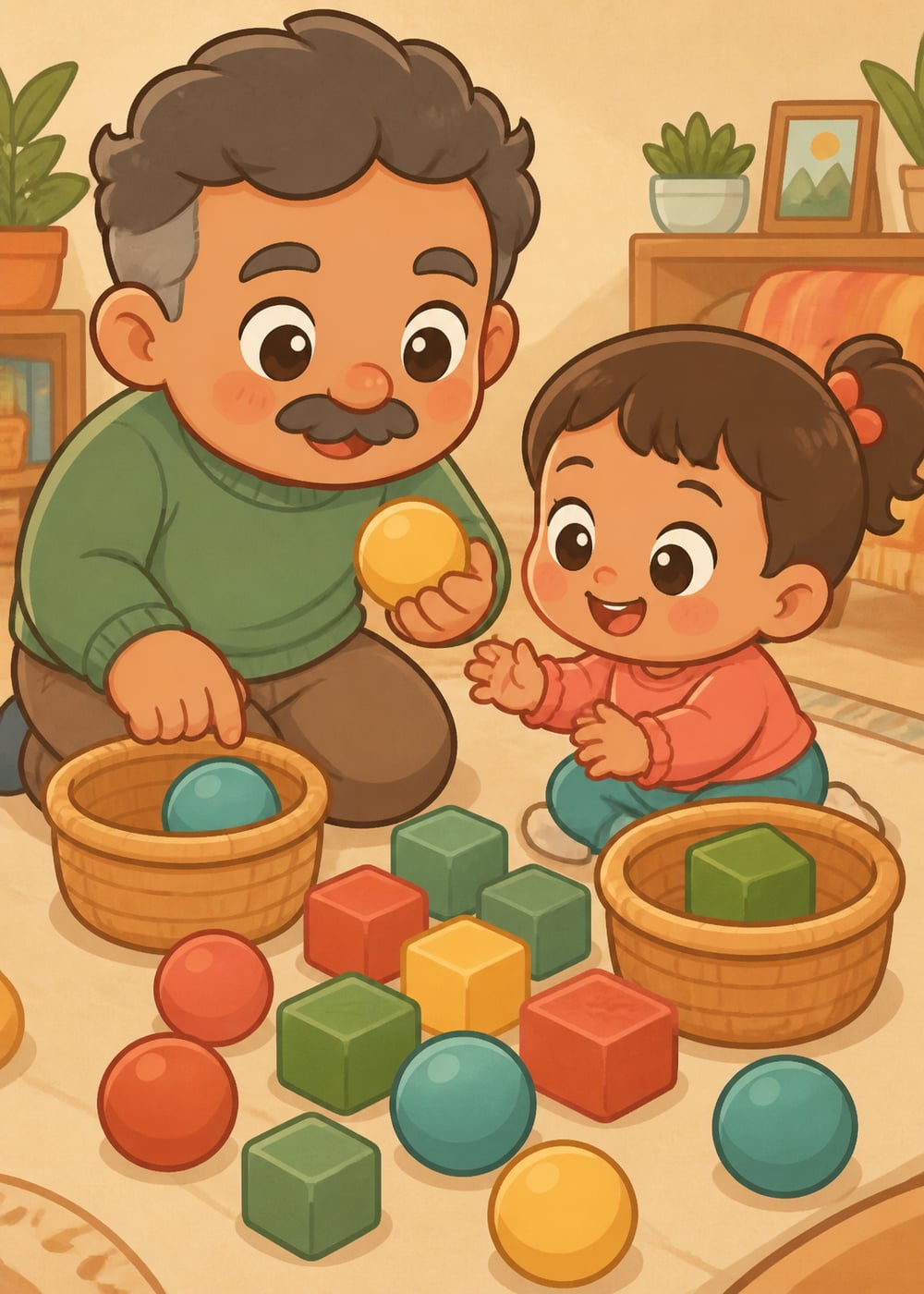 Learning
Sorting
10 minAt homeAge range: 1–3 years · 10 min
Put a pile of soft balls and big blocks on the floor with two baskets. Drop a ball in one basket and a block in the other, say what each is, then hand your toddler the next one.
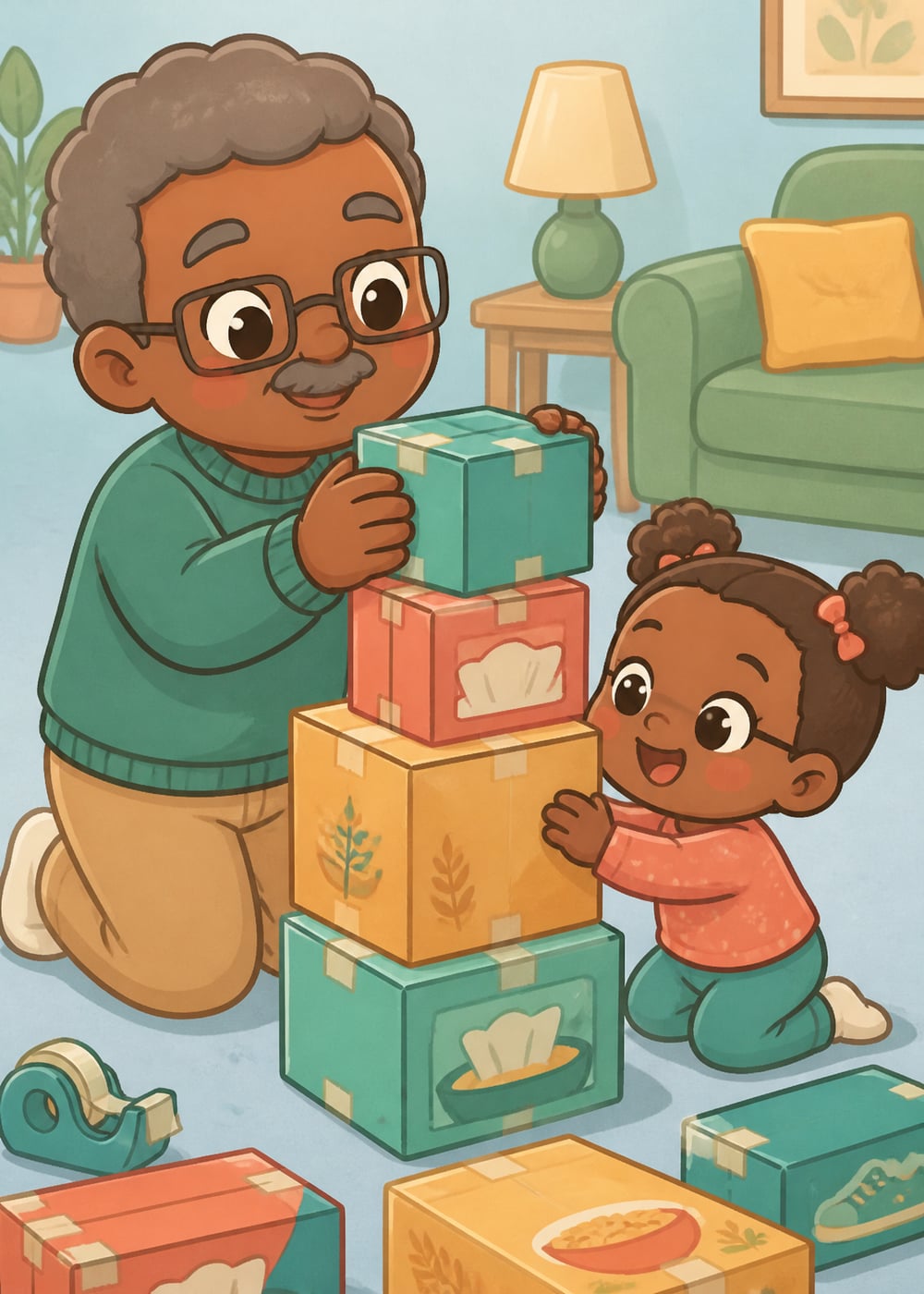 Toys
Cause and effect
15 minAt homeAge range: 1–4 years · 15 min
Wrap or tape shut a few empty tissue, cereal and shoe boxes to make big light blocks. Stack them on the floor with your toddler, then knock them over and start again.
 Outdoors
Cause and effect
15 minOutsideAge range: 1–4 years · 15 min
Bundle up and step into a patch of fresh snow. Stomp to make footprints, look back at the trail you made together, then scoop a little snow onto a mitten and watch it fall.
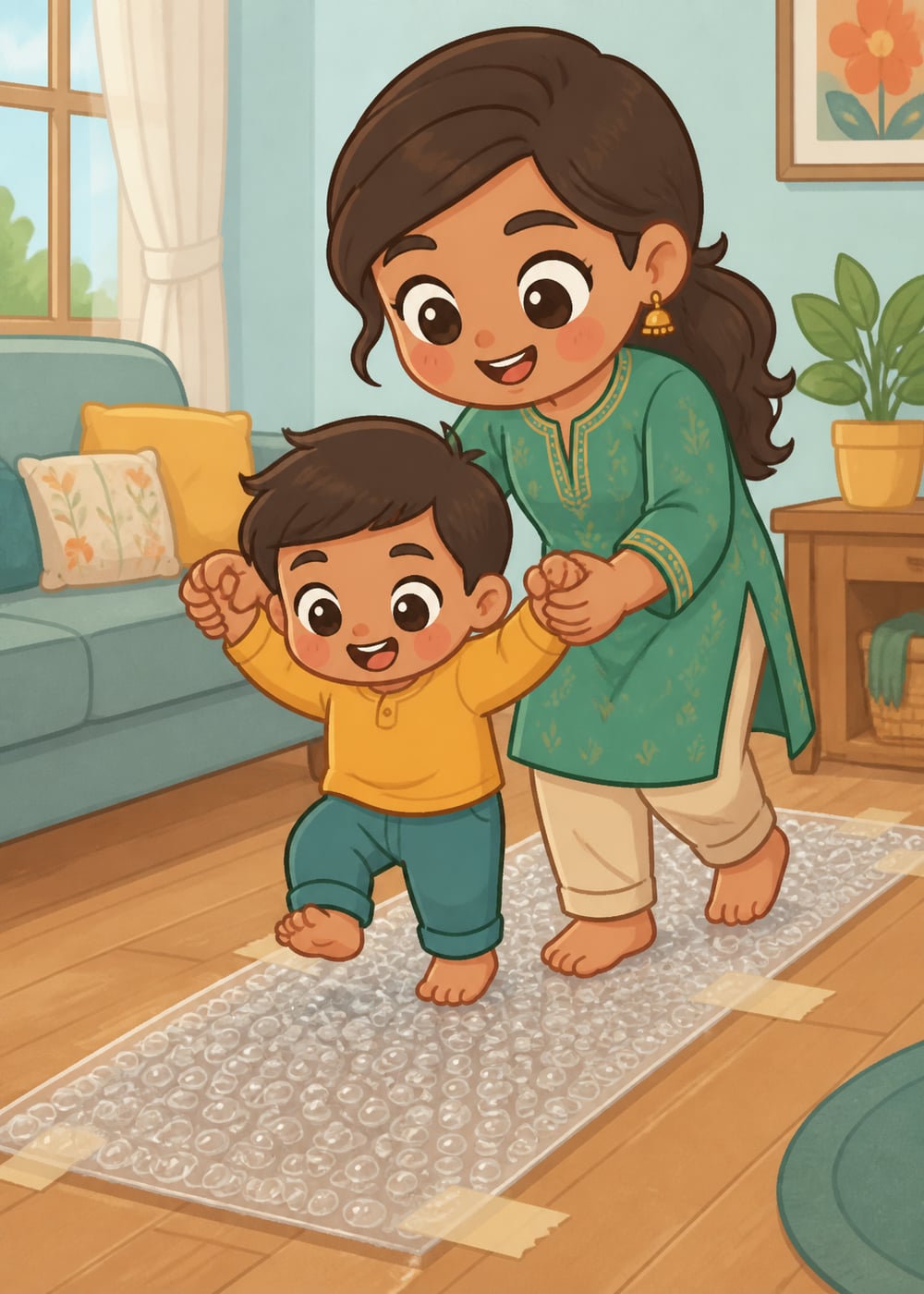 Home
Cause and effect
10 minAt homeAge range: 1–4 years · 10 min
Tape a long strip of bubble wrap to the floor, bubbles up. Hold your toddler's hands and walk across it together, listening to the pops, then let them stomp, jump, or slide their feet along it.
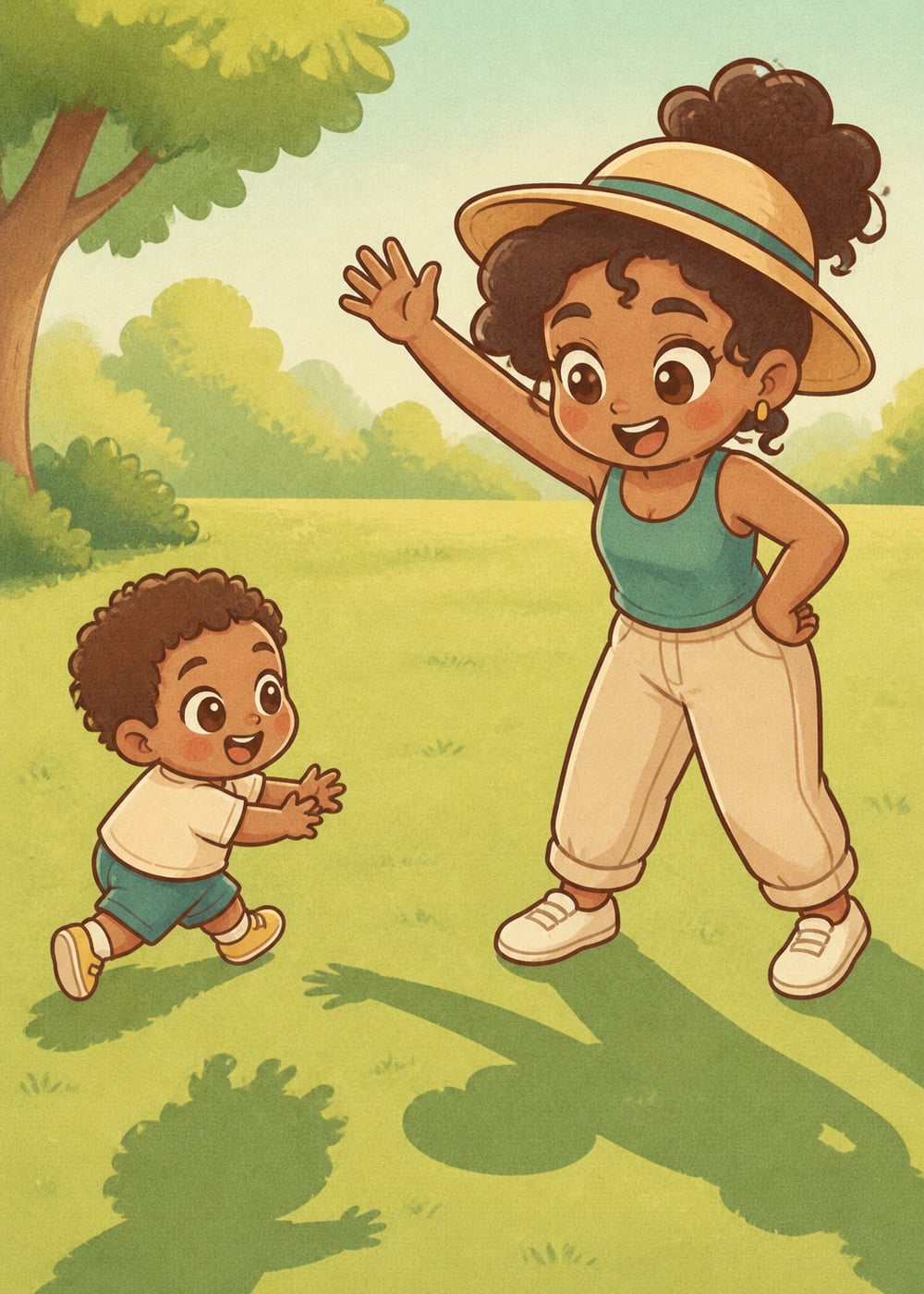 Outdoors
Early science
10 minOutsideAge range: 1–3 years · 10 min
On a sunny day, stand with your back to the sun and wave an arm so your toddler can see the shadow wave back. Stomp on it, tiptoe away from it, and let them chase yours.
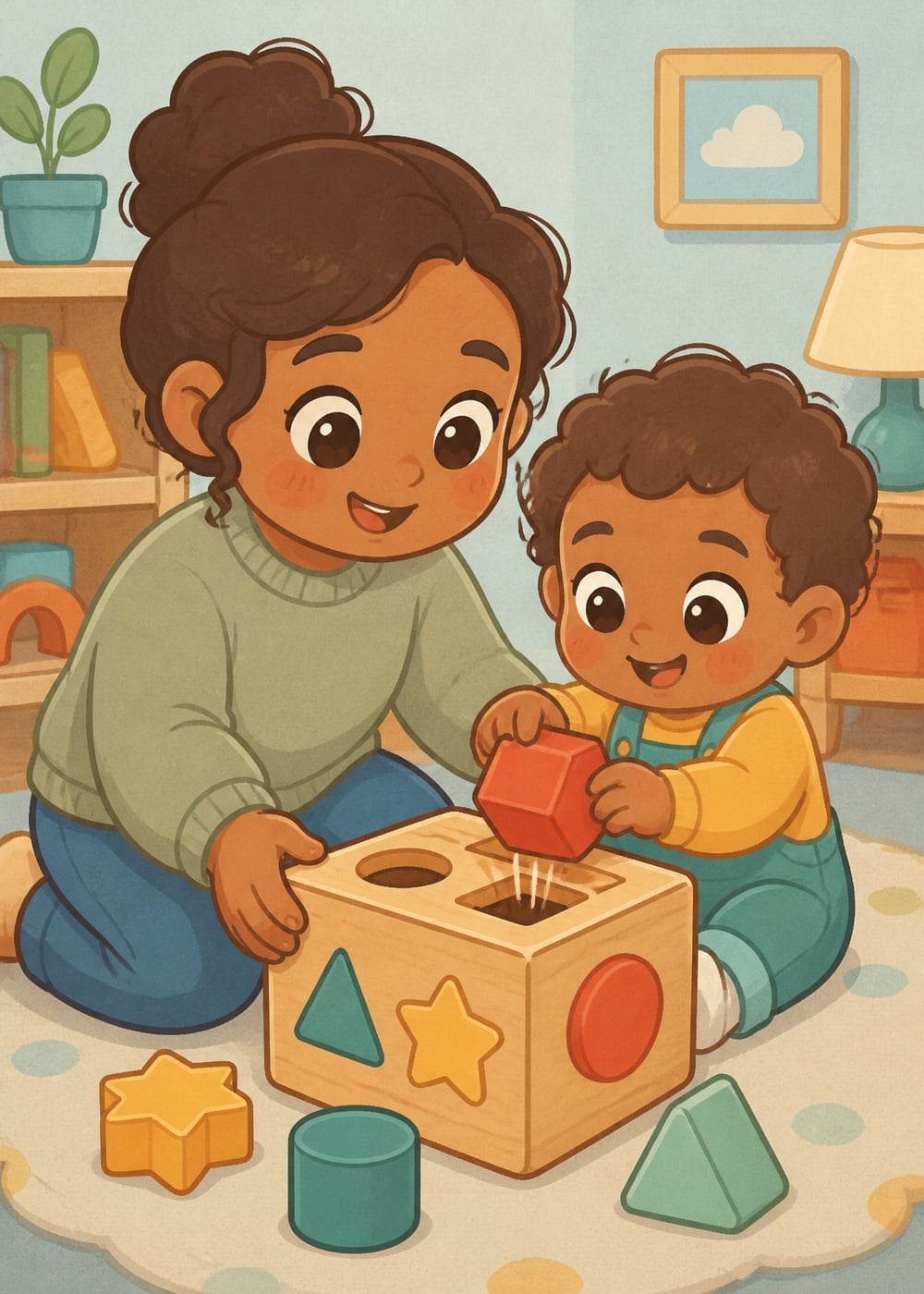 Toys
Shapes
10 minAt homeAge range: 1–4 years · 10 min
Sit with a simple shape sorter and show how a block drops through the matching hole. Let your child try each piece, turning it until it fits, and hold the box steady if it slides.
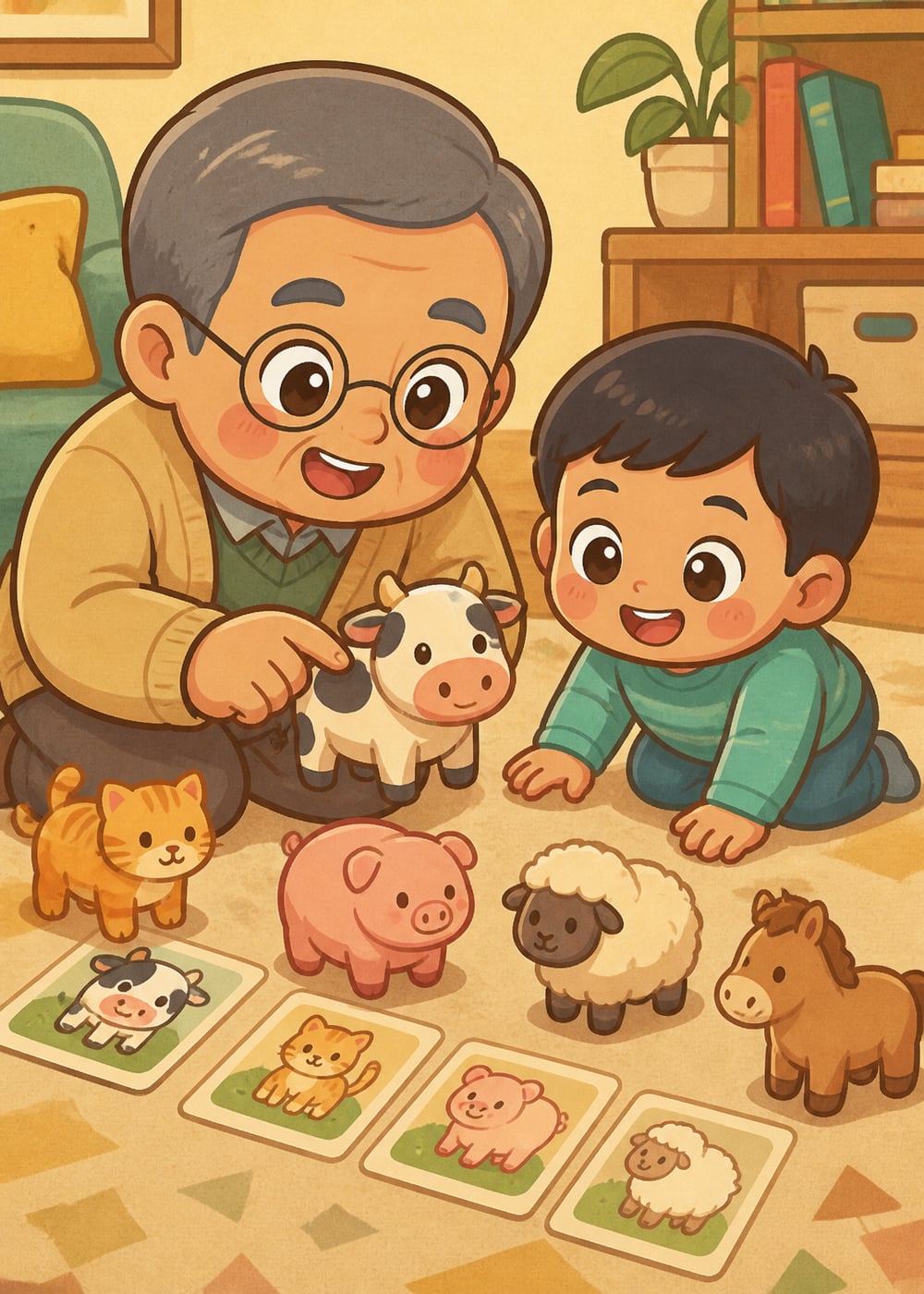 Learning
Matching
10 minAt homeAge range: 1–4 years · 10 min
Lay out a few toy animals and a few animal pictures cut from a magazine or drawn on cards. Show your toddler how to put the cow on the cow card, then see which they can match on their own. Name each animal and make its sound.
 Outdoors
Cause and effect
10 minOutsideAge range: 1–3 years · 10 min
Hold a pinwheel up in the breeze or blow on it softly so your toddler sees it whirl. Hold it in front of them so they can blow too, then hold it still to see it slow down.
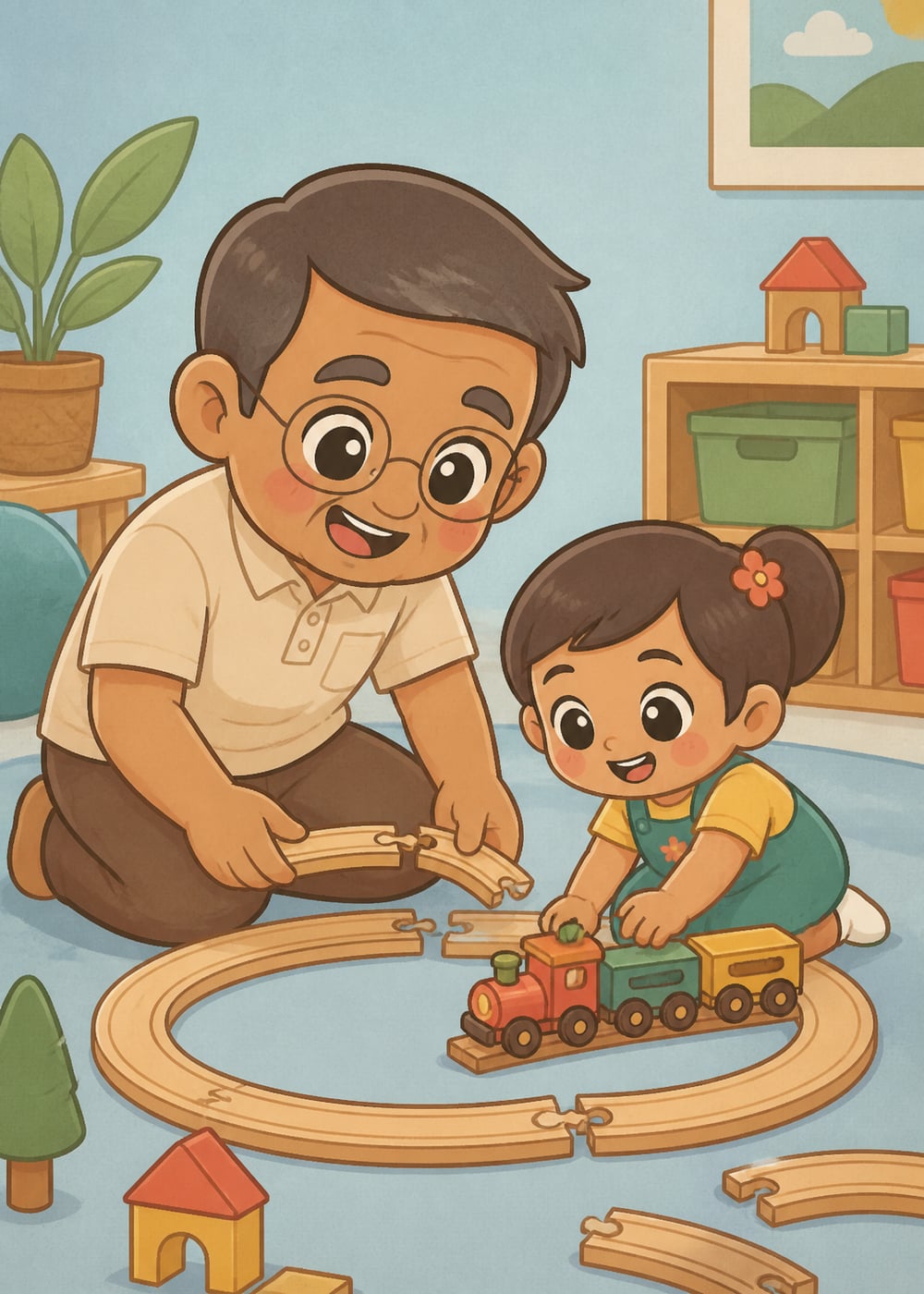 Toys
Problem solving
20 minAt homeAge range: 1–4 years · 20 min
Snap together wooden or plastic train track on the floor and talk about where the train goes. Let your toddler add a piece, push the train round, and fix any gaps together.
 Outdoors
Early science
30 minOutsideAge range: 2–6 years · 30 min
Take a short walk and invite your child to choose leaves with different colors and shapes.
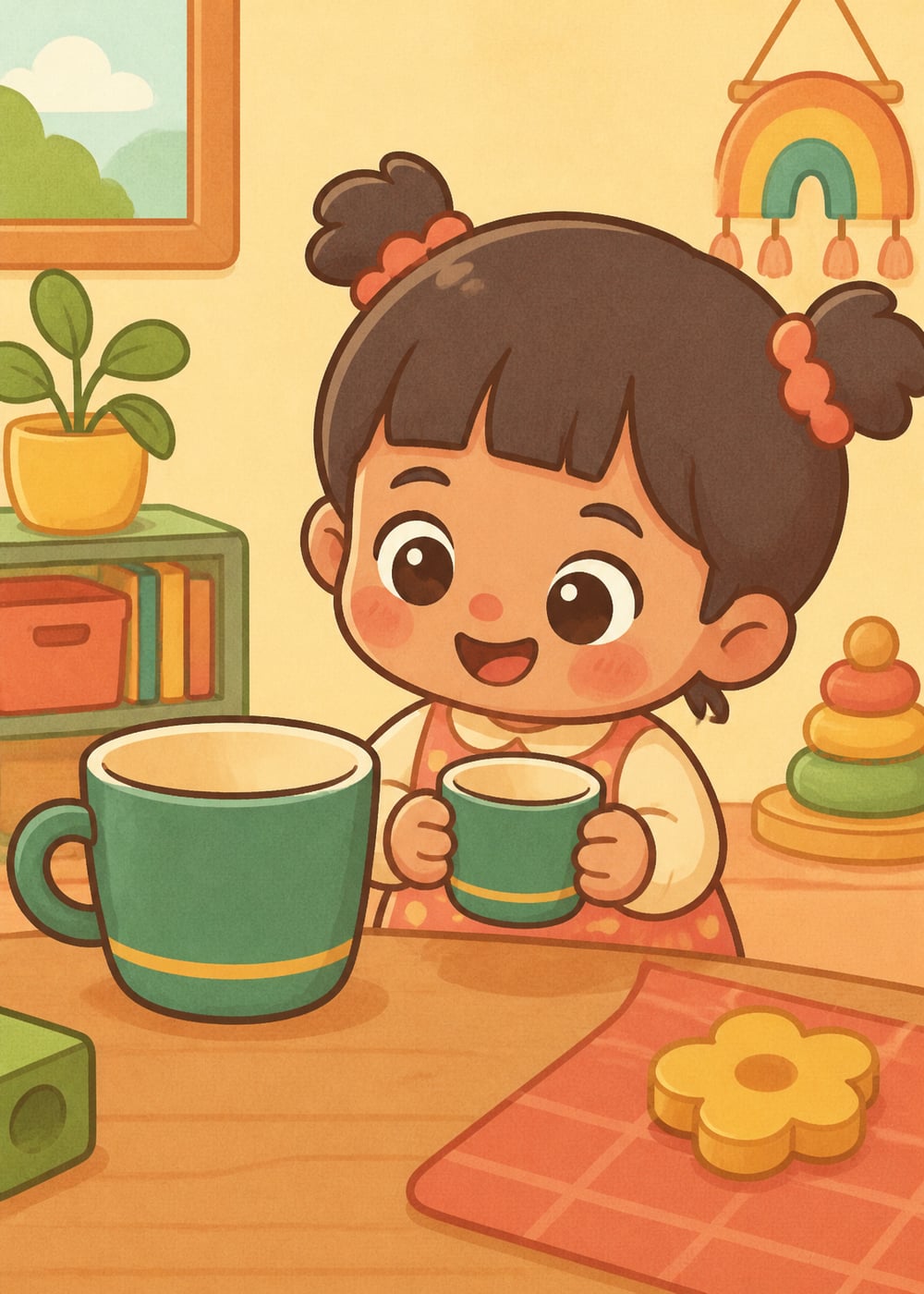 Learning
Comparing sizes
10 minAt homeAge range: 2–4 years · 10 min
Put out two sizes of the same thing, like a big and a small cup, bowl, or spoon. Ask which is bigger, hand over the small one, then try a new pair.
 Learning
Counting
5 minAt homeAge range: 2–4 years · 5 min
Count each step aloud as you climb stairs, walk along the sidewalk, or hop up the doorstep. Slow down at each number, and let your toddler count along. Point at the last step and say how many.
 Learning
Matching
12 minAt homeAge range: 2–6 years · 12 min
Pick one color and invite your child to find three safe objects that match it.
 Toys
Cause and effect
15 minAt homeAge range: 2–5 years · 15 min
Prop a board or sturdy book against the sofa to make a ramp and take turns rolling toy cars down it, cheering to see whose goes farthest.
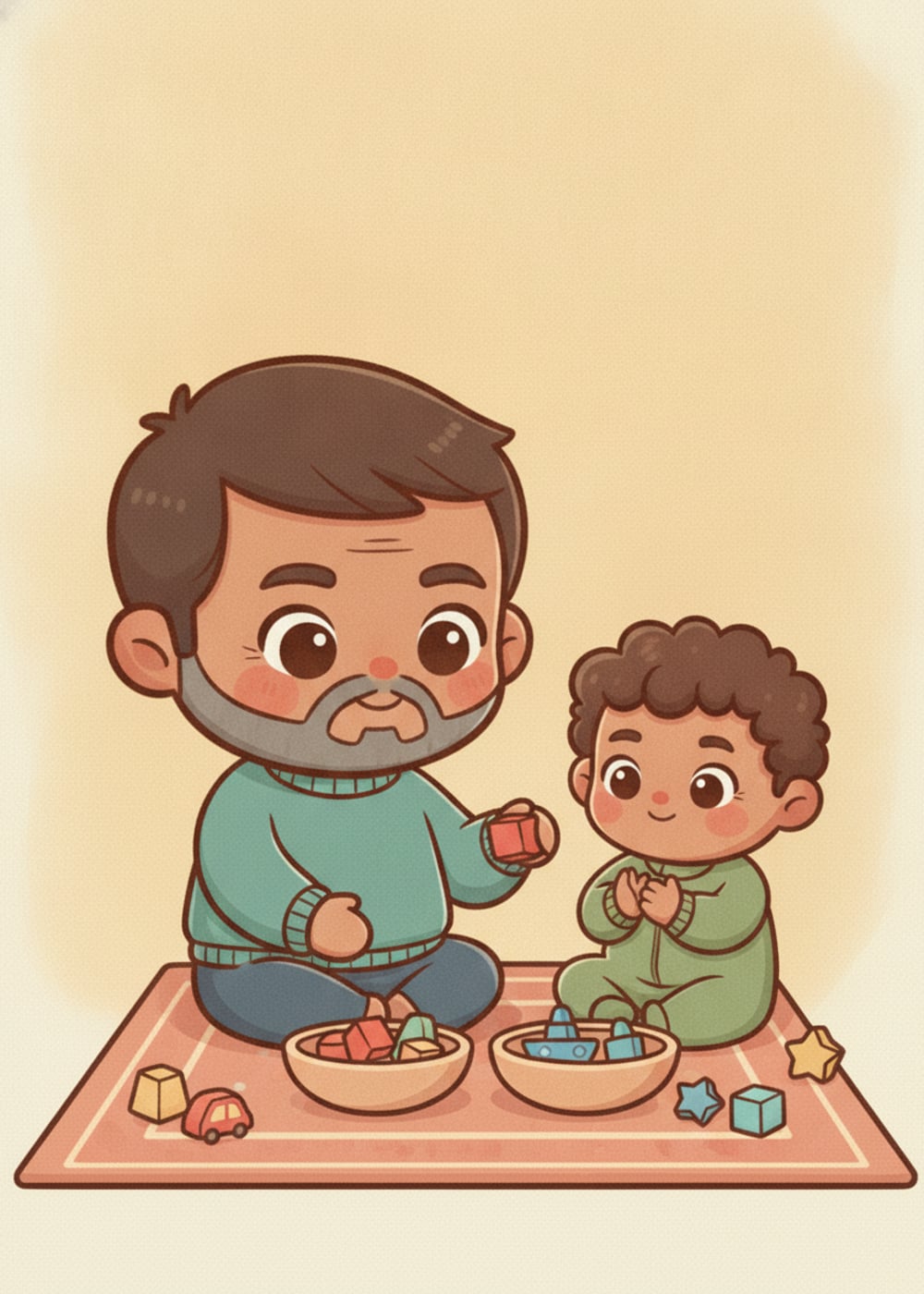 Learning
Sorting
10 minAt homeAge range: 2–4 years · 10 min
Gather a handful of colorful toys and two bowls, then sort the red things into one and the blue into another alongside your child. Name each color out loud as it drops in.
 Outdoors
Cause and effect
15 minOutsideAge range: 2–6 years · 15 min
After the rain, find a puddle together and take turns dropping in little pebbles, watching the ripples spread and listening for each plop.
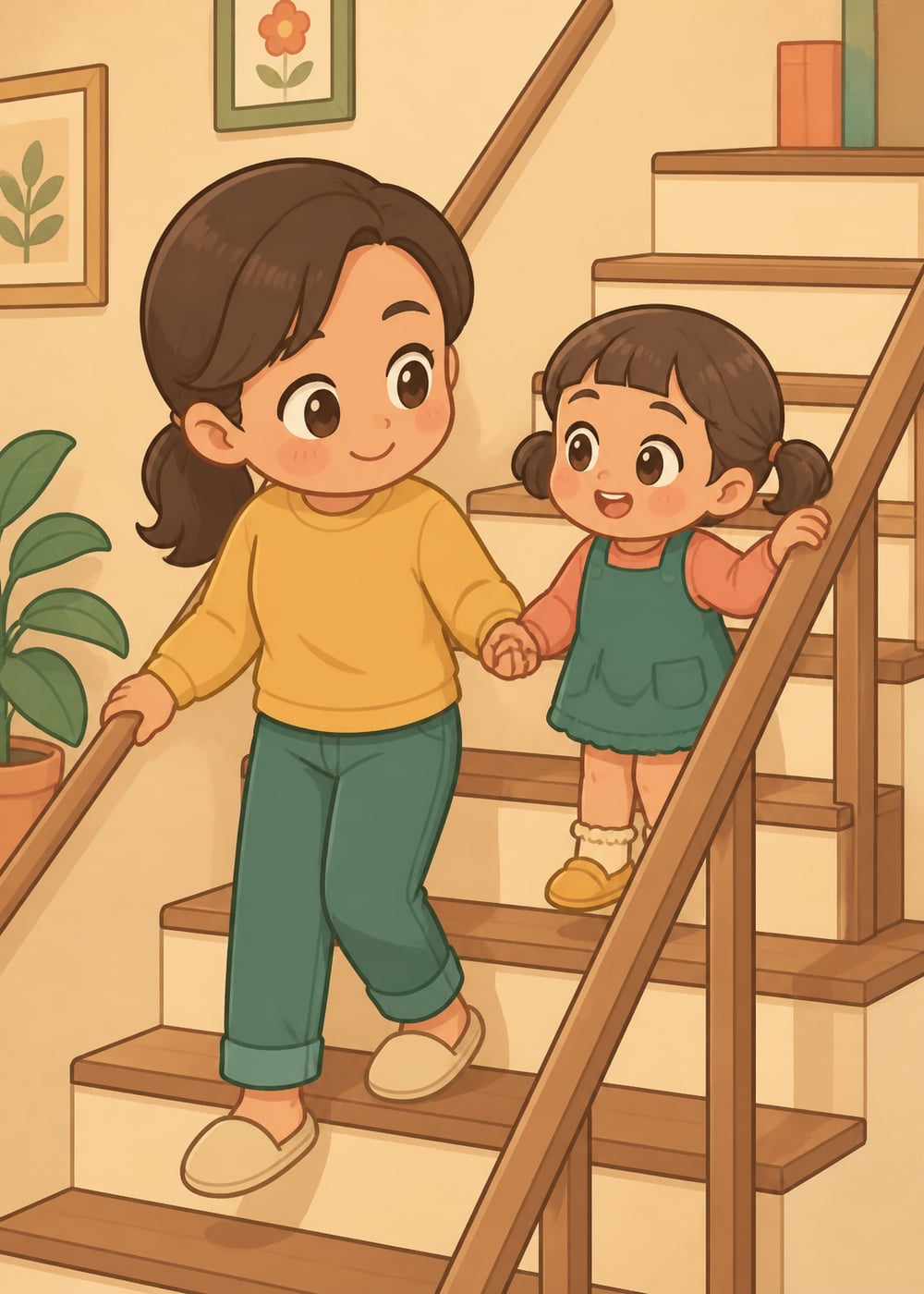 Learning
Counting
10 minAt homeAge range: 2–4 years · 10 min
Stand together on a middle step and ask, \"Which step are we on?\" Say the number, then climb one step at a time and ask again. On the way down, hold hands and count backward without touching the steps.
 Learning
Patterns
15 minAt homeAge range: 3–6 years · 15 min
Line up blocks or buttons in a repeating pattern — red, blue, red, blue — and ask your child what comes next. Take turns starting new patterns for each other to continue.
 Learning
Counting
10 minAt homeAge range: 3–5 years · 10 min
Count real things around you together — stairs as you climb, apples in a bowl, buttons on a coat — touching each one as you say the number. Let your child lead when they can.
 Home
Problem solving
15 minAt homeAge range: 3–6 years · 15 min
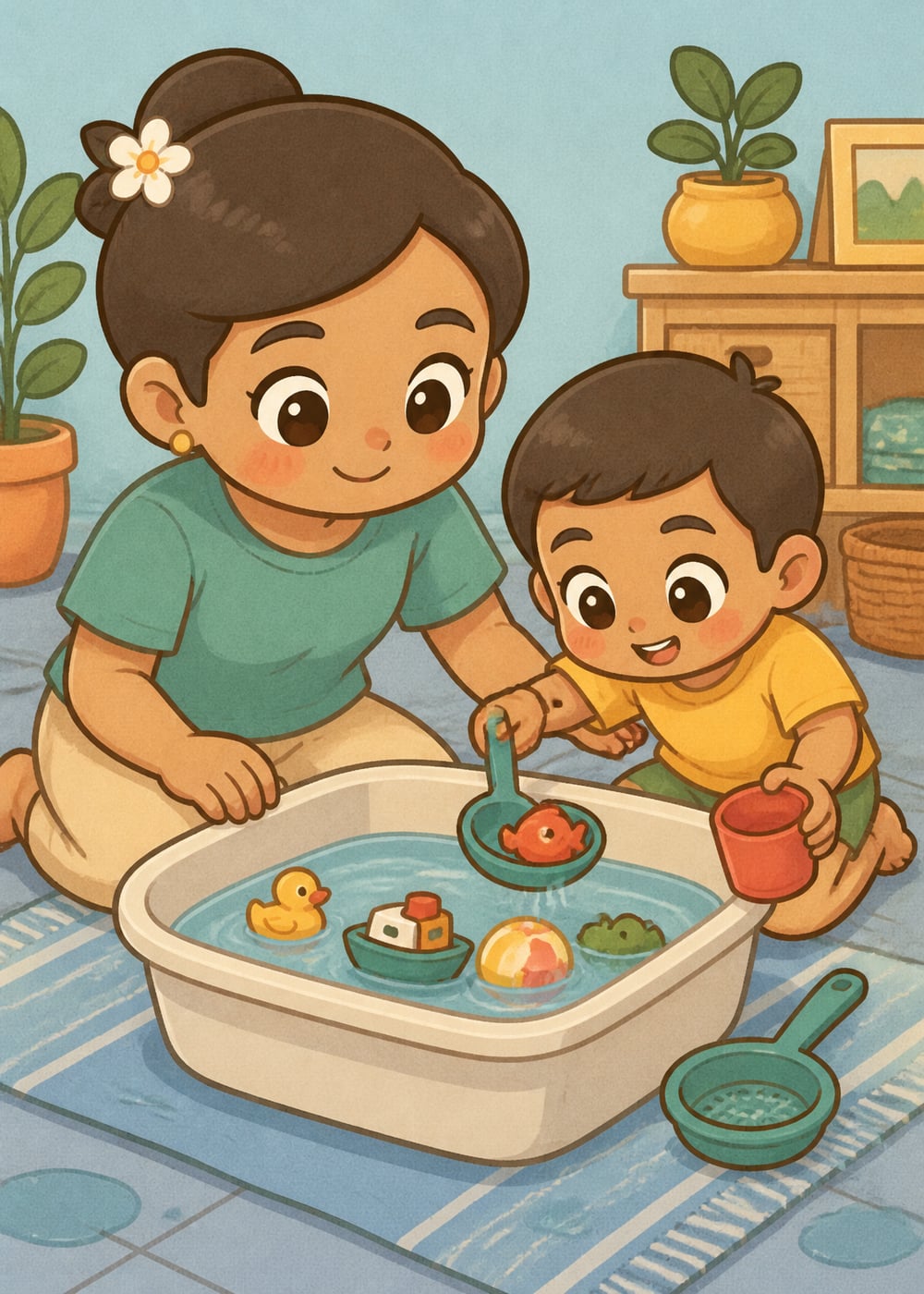
Put a plastic bin or dishpan on a towel on the floor and add a few inches of water, then drop in some plastic toys. Give your child a spoon, a small sieve, and a cup, and let them figure out how to get each toy out. Ask what worked best.
 Outdoors
Early science
25 minOutsideAge range: 3–6 years · 25 min
Lift a rock or peek under leaves together and quietly watch the bugs your child spots going about their day.
 Home
Comparing sizes
10 minAt homeAge range: 3–6 years · 10 min
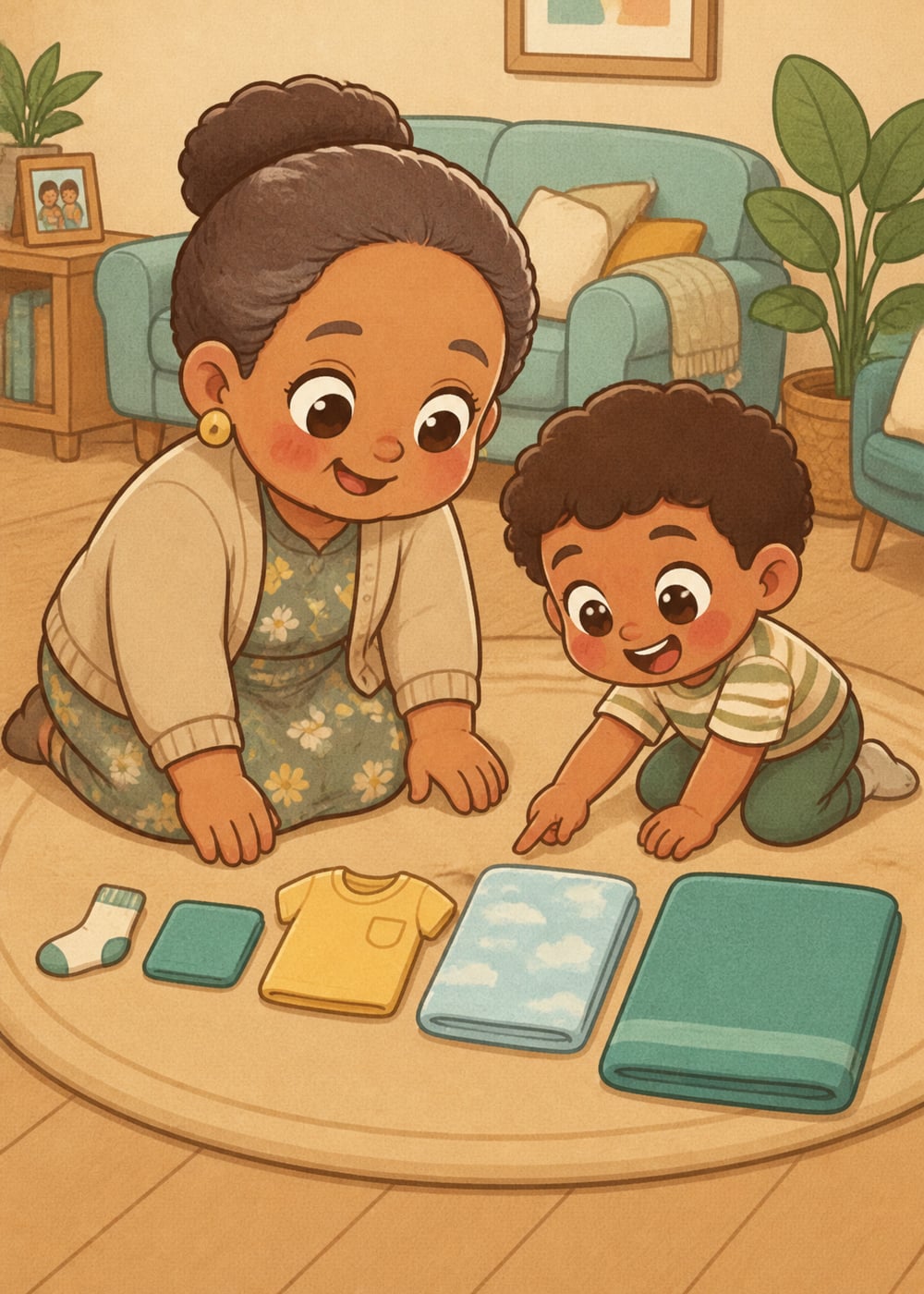
Pick five clean things from the laundry, like a sock, a washcloth, a T-shirt, a pillowcase, and a bath towel. Ask your child to lay them in a line from smallest to biggest, then check together by laying each one on top of the next.
 Home
Matching
15 minAt homeAge range: 3–6 years · 15 min
Tip a basket of clean socks onto the bed and help your child find each sock's match and fold the pairs together.
 Montessori
Sorting
15 minAt homeAge range: 3–5 years · 15 min
Tip a handful of buttons onto a tray and set out a cup for each color. Sort a few together, then let your child finish the rest.
 Outdoors
Number recognition
20 minOutsideAge range: 3–6 years · 20 min
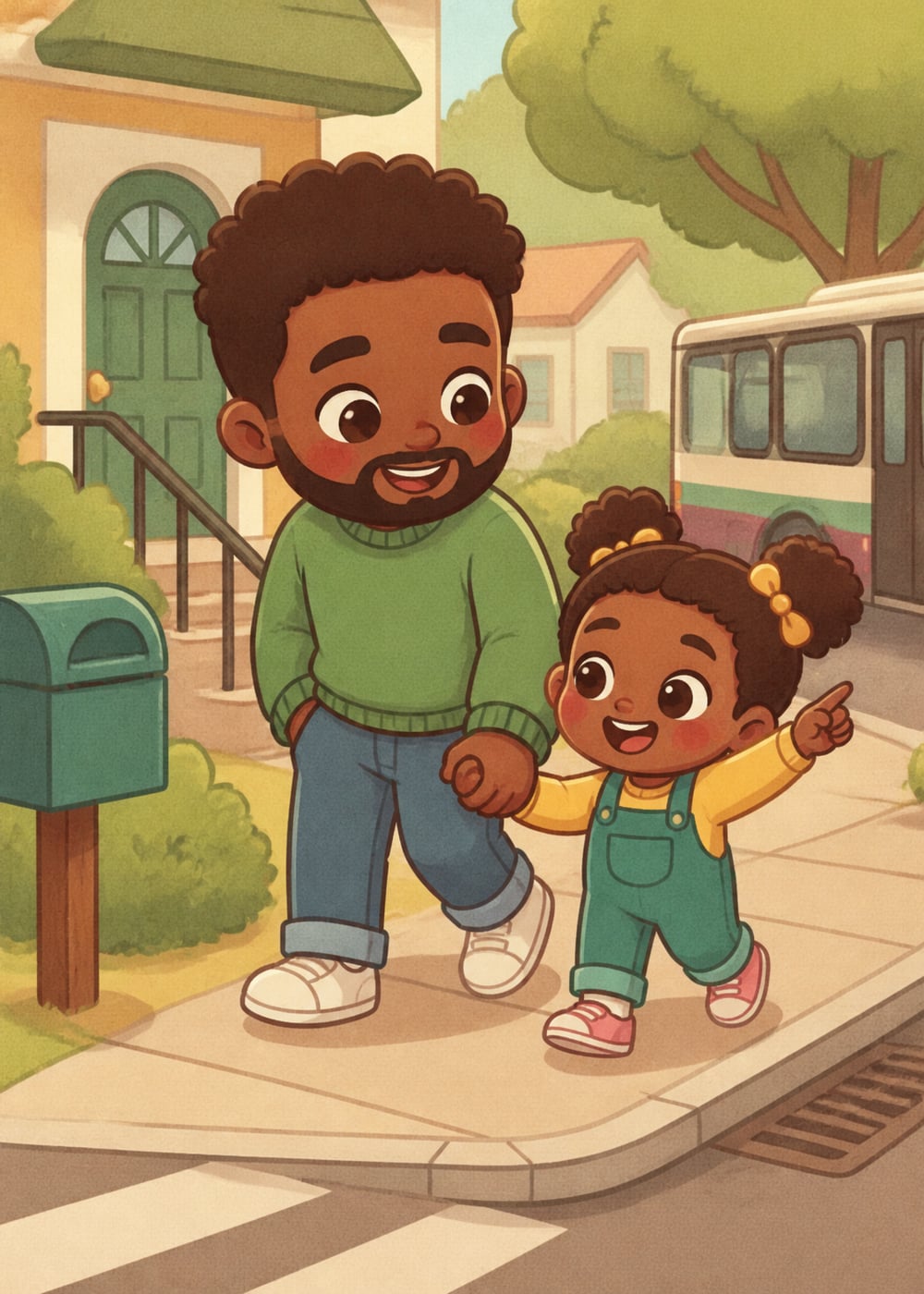
Walk around the block and point out numbers you pass, on house doors, buses, mailboxes, and signs. Ask your child to find a number they know, or the biggest number they can see, and say it out loud together.
 Learning
Early science
20 minAt homeAge range: 3–6 years · 20 min
Fill a bowl with water and gather a few safe objects, then guess together which will sink or float before dropping each one in.
 Home
Number sense
10 minAt homeAge range: 3–6 years · 10 min
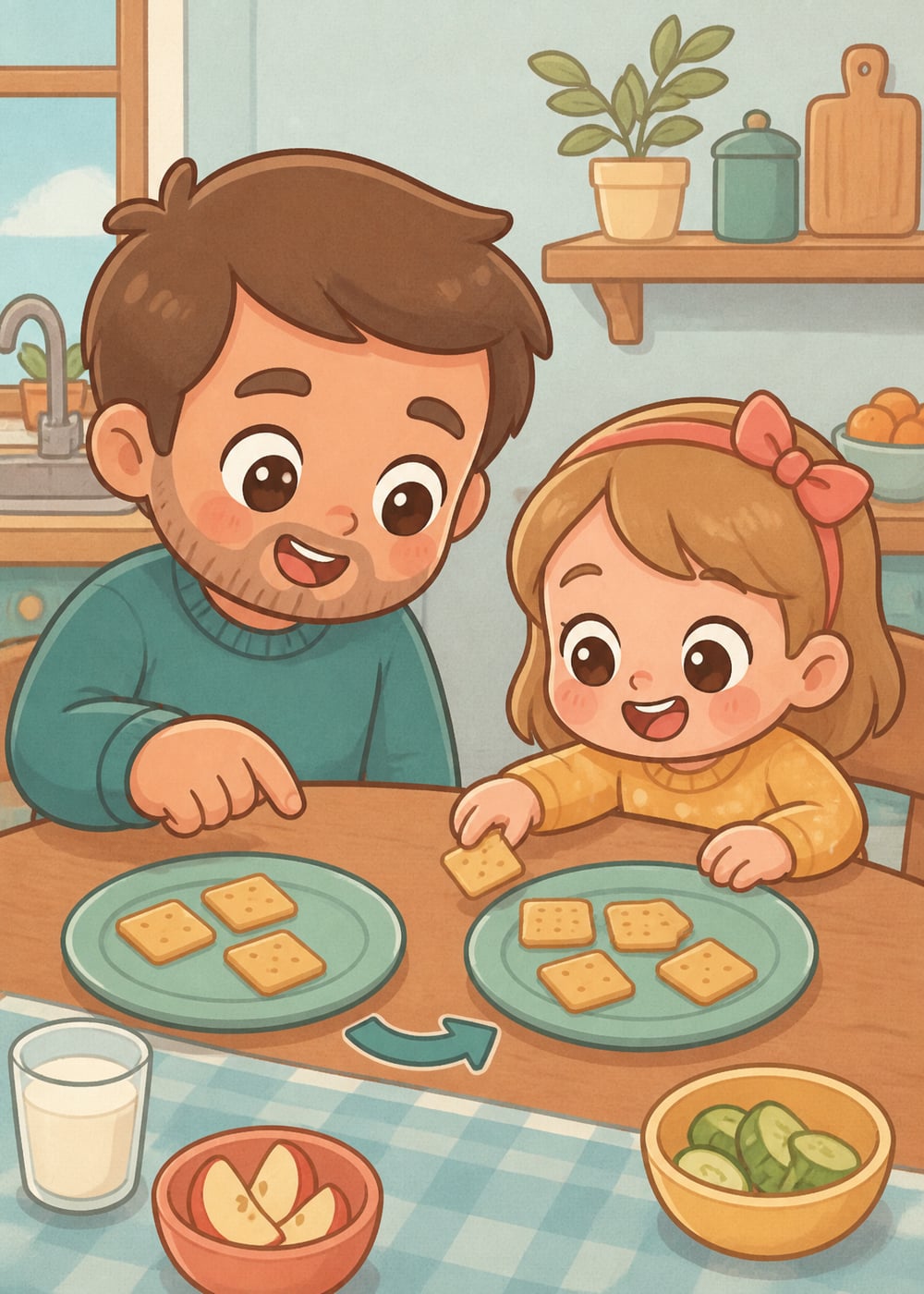
Put a few crackers on one plate and a different number on another, and ask which plate has more and which has fewer. Count them together to check, then let your child move one over to make the plates match before they eat.
 Learning
Number sense
15 minAt homeAge range: 4–6 years · 15 min
Use a simple bead frame or abacus and have your child solve small addition problems by moving beads instead of counting fingers.
 Learning
Shapes
15 minAt homeAge range: 4–6 years · 15 min
Walk through the house together looking for circles, squares, and triangles — a clock, a window, a slice of toast. Name each shape aloud as you spot it.
 Toys
Cause and effect
20 minAt homeAge range: 4–6 years · 20 min
Stand dominoes or blocks in a wobbly line together, then let your child tip the first one and watch the whole run topple.
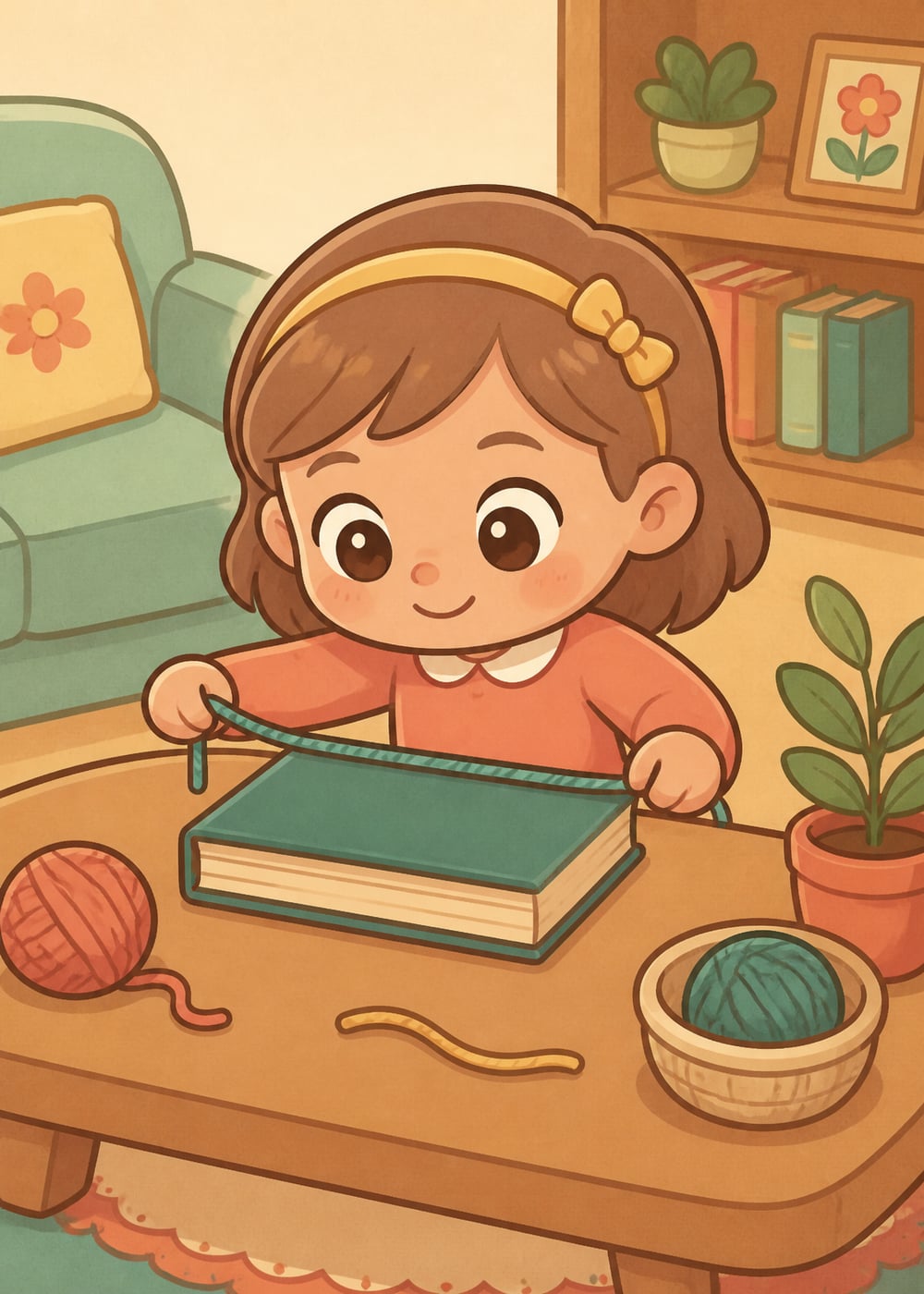 Learning
Measuring
15 minAt homeAge range: 4–6 years · 15 min
Cut a length of string, then hold it against objects around the house to see which are longer and which are shorter. Cut a new piece to match something that interests your child.
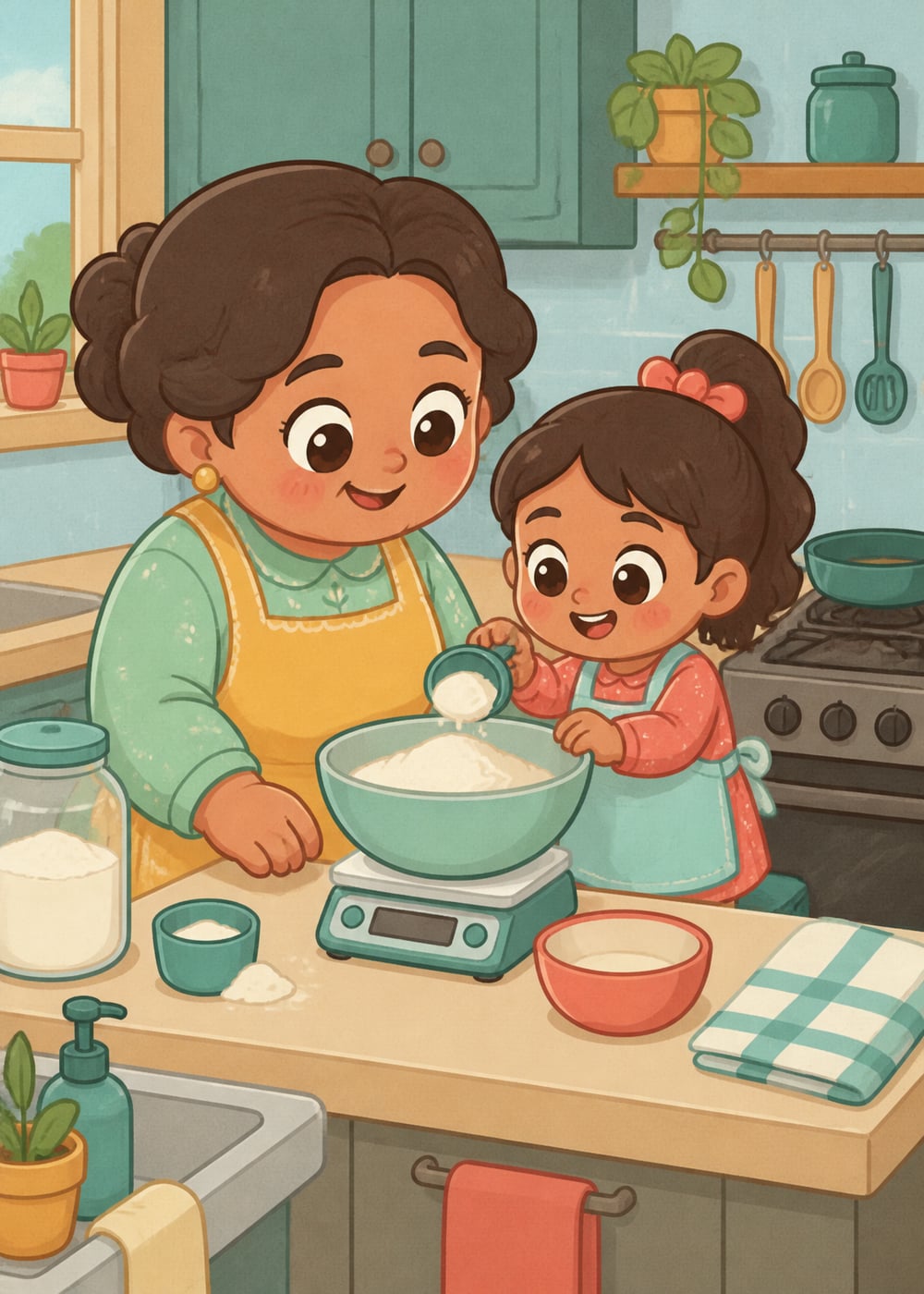 Home
Measuring
20 minAt homeAge range: 4–6 years · 20 min
Set a bowl on a kitchen scale, press zero, and let your child spoon in flour until the number on the display matches the recipe. Read the number together and say when to stop. Then you take over the heat and the pan.
Free to start
Kigomo turns kid-friendly routines, places, and care tasks into cards parents can save, schedule, complete, and privately share — with everyone who helps, free.
Coming soon to the App Store